


A Stripped Smoothie | Vitamin C Surge

May 23, 2013

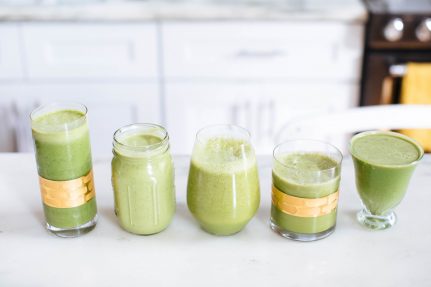
This smoothie is loaded with (can you guess?), VITAMIN C and enzymes! The key ingredients in this smoothie are pineapple, papaya, banana, and cucumber. The flavors of this smoothie are cool, refreshing, bright, and full of sweet citrus notes; it reminds me of sitting on the beach somewhere in the tropics relaxing…ahhh, let’s just take a moment and fantasize about that. Okay, moment over, smoothie time!

photo (4)

Pineapple is the star of this smoothie. Pineapple is very high in vitamin C and manganese, in which both play key role in energy production and antioxidant defenses. Papaya is high in vitamin C and vitamin A, both contain helpful digestive enzymes. Pineapple contains an enzyme called bromelain which is not only helpful for our digestion and breakdown of amino acids (a.k.a. proteins), but also has great anti inflammatory benefits. Bromelain found in pineapple is not only a great antioxidant and enzyme, but has been touted to help with inflammation, muscle relaxation//contraction//pain, cancer prevention, antibiotic absorption, enhances excretion of fat, shortens labor, and inhibits blood platelet aggregation (a.k.a. blood clotting).  But wait, papaya also has a digestive enzyme called papain, that acts very similarly to bromelain found in pineapple.

I love this smoothie whenever I’m feeling a little cold//flu coming on, when I feel I need a little extra boost of antioxidants, or need a digestive aid.

Vitamin C Surge nutrient breakdown|

  • Vitamin C (obviously, ha)
  • Manganese
  • Vitamins | A, B1, B5, B6, folate, E, K
  • Potassium
  • Magnesium
  • Copper
  • Molybdenum
  • Protein
  • Fiber
  • Antioxidants
  • Phytonutrients | flavonoids, lignans, triterpenes (mainly from cucumbers)
Vitamin C Surge
 
Prep time

Cook time

Total time


A surge of vitamin c to boost your immune system, prevent the cold/flu, or just to give yourself the flavor of the tropics!
Author:
Recipe type: smoothie
Serves: 1

Ingredients
  • 1 cup frozen organic pineapple (or fresh)
  • 1 frozen banana
  • ½ frozen cup papaya (or fresh)
  • 1 whole organic cucumber (I prefer English cucumber)
  • ½- 1 cup water, coconut water, or almond milk (I like using coconut water with this one)

Instructions
  1. Simply combine all the ingredients into a high speed blender and blend until thick and creamy. You may add more/less liquid depending on desired thickness.

photo 1

Do you enjoy pineapple? What’s your favorite way to eat pineapple? Comment below!

Happy blending friends!

xo McKel

Curry Cashew Cauliflower Soup

May 21, 2013

No soup for you! (Seinfeld reference anyone?) I’m only kidding, you can have all the soup you want of course, especially with this soup recipe. Last week we talked all about the almighty cruciferous vegetable, cauliflower. Today, I’m sharing another one of my favorite recipes using cauliflower, Curry Cashew Cauliflower Soup. This soup combines many flavors ranging from hot, spicy, and bold from the curry and turmeric, sweet and nutty flavor of the cashews, with a hint of brightness from the citrus. The final result is a delicious thick and creamy soup with complex flavors, and without the use of any dairy, cream, gluten, and the like.
photo 1
What exactly is curry? Curry is a generic term for a spice blend/mix that contains ingredients such as turmeric, cumin, coriander, paprika, mustard seeds, cinnamon, red/black papper, red chili, hot peppers, ginger, clove, cardamom, bay leaf, and fenugreek; in no specific ratio, recipe nor does it have to contain all of the above ingredients. The curry blends are more of a Western culture approach, as the Eastern cultures typically will make curries “on the spot” with not only taste preferences in mind, but  may also be influenced by family culture, family tastes, tradition, religious views, and of course variations by region.
Curry is a great representation of the classic sweet and savory combination. The sweet spices found in curry such as cinnamon, cardamom, and clove pair well with the more savory spices such as turmeric, cumin, coriander, and bay leaf. The level of heat a curry will be is the result of how much/little red, black pepper or ginger is involved. Obviously the hotter curries will contain larger amounts of red chilies or red pepper/peppers, whereas the mild curries may contain more ginger and black pepper.
photo 3
This is the precise reason I love curry so much, they’re are so many different types, flavor profiles ranging from sweet to hot, variations of heat, and depths of flavor. What’s also beautiful about playing with curry in the kitchen, is it can be built upon, layer by layer simply by adding more curry powder and even mixing several different curry blends together. Traditionally, curries are made in this way by adding specific herbs and spices at varying times throghout the cooking process.
Not only is this a unique and scrumptious soup, but it’s also loaded with nutrition especially in the form of antioxidants from the wonderfully powerful curry and turmeric spices (more on the specifics of these later) and the cauliflower. In a nutshell, this soup contains high amounts of antioxidants, anti inflammatory compounds, vitamin C, vitamin B (B1, B6), vitamin K, iron, zinc, selenium, manganese, copper, magnesium, phosphorus, fiber, protein, and healthy fats.
photo 1
I typically will store this in an air tight tupper ware container in the refrigerator for up to a week, honestly it never lasts that long when I make it, it’s just too good!
Tips when making
  • Optional } to roast 1 head and leave 1 head of cauliflower raw, but I love the depth of flavor roasting creates.
  • Thickness } You may add in as little or as much liquid in the form of water or almond milk as you like; the more, the thinner the soup; the less, the thicker the soup.
  • Curry } choose curry powders that will appeal to your tastes. They’re a variety of blends out there from sweet, mild, medium, hot, extra hot, Chinese Curry, African Curry, Malaysian Curry,
    • All of the spices used in this recipe are found in your local grocery store, even more discounted if you have a favorite local International market.
  • Cashews } create a nice thick, creamy, and sweet texture/flavor profile to this soup. If you’re allergic or cashews simply aren’t your cup-o-tea, then replace with another nut/seed (walnuts, almonds, etc.).

photo 2

Curry Cashew Cauliflower Soup
 
Prep time

Cook time

Total time


A creamy curry cauliflower soup with powerful antioxidants and unique flavors.
Author:
Recipe type: soup
Serves: 4-6

Ingredients
  • 2 small heads organic cauliflower (or 1 large head)
  • 1 small sweet onion
  • ¾ cup raw cashews (soaked for at least 1 hour)
  • 1 cup unsweetened almond milk
  • 1 cup filtered water
  • 2 Tbs. miso paste
  • 1 Tbs. hot curry seasoning (sweet, hot, mild depending on how you like it)
  • 1 tsp. Garam masala
  • 1 tsp. ground turmeric
  • 1 juice of orange (or lemon if you don’t have an orange)
  • ¼ tsp. stevia (or 1 serving size), you may also use 1 Tbs. local honey
  • ¼ tsp. cinnamon (to taste)
  • 1 glove garlic
  • ¼ tsp. of salt (to taste)
  • ground black pepper

Instructions
  1. Preheat oven at 400 degrees
  2. Roast 1 small head of cauliflower for at least 20 minutes or until golden brown, (keep the other cauliflower head raw).
  3. In a pan, sauté onions with coconut oil and all the spices/herbs (curry, turmeric, salt, pepper, garlic, cinnamon).
  4. Cut both the roasted head and raw head of cauliflower into chunks.
  5. Transfer the sauteed onion and spices into the blender, food processor, or emersion blender.
  6. Pour all remaining ingredients (filtered water, almond milk, citrus, etc.) into a high speed blender, food processor, or you can use an emersion blender (in a large pot).
  7. Blend until thick and creamy.
  8. Reheat on stove until warm/hot.
  9. Garnish with fresh cilantro, basil, or rosemary.
  10. Enjoy!

Have you tried curry before? What’s your favorite way to have curry? Share below!

Now go get CURRY-ed away making soup!

xo McKel

Cauliflower Pizza Crust

May 17, 2013

Earlier this week we talked about the amazing cruciferous vegetable cauliflower, now let’s put that knowledge into practice and make one of my (new) favorites with cauliflower… Cauliflower Pizza Crust! Cauliflower crust has become very popular within the low carb and paleo communities. {If you’re wondering what paleo is, I’ll let this guy, and this one, her, and him too, tell you all about it}. I’ll reserve paleo lifestyles for another post. Till then, back to the good stuff, pizza!

photo 3

I’ve played around with this recipe for a couple weeks now, and it was hard work, you know eating all these pizza crust “failures”; but hey, all in the work of a good recipe! When I think of pizza crust I think of a several variations- doughy, crispy, thick crust, thin crust, New York style, Chicago style, flatbread, etc. This pizza crust recipe is more thick and doughy than thin. If a thin crust is what you’re after, a couple modifications to the recipe should lend a thinner crust (see in the Note section of the recipe).

Cauliflower pizza crust is great on so many levels. First and foremost, we forgo all the heavily processed carbohydrates that taste great for a second on the tongue; but leave us feeling heavy, weighted down, and down right lethargic afterwards. Food should not only taste great, but it’s gotta make us feel great! If you’re eating foods that make you feel like there’s a brick in your stomach or you want to take a nap after, check out what you’re putting in that beautiful body of yours (and let’s start with that pizza we all love so much).

Cauliflower Crust Tutorial |  

photo 3

photo 4

This pizza crust is without any of the “dough”, no gluten, no dairy, no grains, nothing but goodness from cauliflower and some fun ingredients you’ve seen here before on Nutrition Stripped. I love incorporating chia seeds into this pizza crust as it creates a “doughy” texture and moistens the overall crust (if you don’t have chia seeds, this recipe still works). Since this may be a very new concept using a vegetable as a “dough”, I thought it’d help everyone out to show you step by step how to make the crust. Let’s take a peak at the recipe and dig in!

Tips to keep in mind | 

  • This isn’t going to be like standard pizza crust you’re used to, so open your mind to a new experience of a “crust”
  • This dough can be very fragile after it’s been baked, just handle with love (and if it falls a part, it’s still darn good).
  • Top with whatever marina or pizza sauce you enjoy (hopefully organic if not homemade!).
  • Have fun with your toppings! Load on them veggies!

photo (6)

photo 1

Cauliflower Pizza Crust
 
Prep time

Cook time

Total time


A unique and innovative way to use cauliflower for a healthier alternative for pizza crust. You’ll be surprised!
Author:
Recipe type: pizza crust
Serves: 2

Ingredients
  • 1 small head cauliflower (about 2 cups yield), after pureeing and squeezed dry
  • 2 whole eggs
  • 1 Tbs. coconut flour
  • 1 Tbs. ground chia seed (this is optional, but it gives it a wonderful chewy texture)
  • 3 Tbs. nutritional yeast
  • 1 garlic cloves
  • ¼ tsp. dried basil and oregano (each)
  • 1 tsp. sea salt
  • fresh ground black pepper

Instructions
  1. Preheat oven to 350 degrees.
  2. To create the pureed cauliflower, simply chop all the cauliflower florets into small pieces, place into a blender and blend until pureed (it doesn’t have to be perfectly smooth).
  3. Place the pureed cauliflower mixture into a nut-milk bag//cheeseclothe//paper towels over a large bowl (to catch the liquid) and squeeze the excess water from the cauliflower.
  4. Let the cauliflower sit within the nut-milk//cheesecloth//paper towl for about 5 minutes, returning to squeeze any further water.
  5. Discard the cauliflower liquid.
  6. The end result will resemble a firm puree.
  7. Combine the remaining ingredients into the large bowl and hand mix with a large spoon or whisk until thoroughly combined.
  8. Spread the “dough” into either 1 large pizza shape or 2 small pizza rounds on a lightly greased pizza pan or cooking sheet.
  9. Avoid spreading the “dough” too thin as the moisture will cause it the crack and pull away from rest of the dough, I like leaving mine about ½ inch thick.
  10. Bake at 350 degrees for about 15-20 minutes, until the top is golden brown and firm to touch.
  11. Take out of the oven and top with your favorite toppings.
  12. Bake for another 10 minutes at 400 degrees or until everything on the top has warmed and melted.
  13. DEVOUR!

Notes
Thinner crust: Simply spread the mixture to a thinner thickness. You may also turn over the crust mid way through the baking process to help “dry” out the bottom so both sides are “crispier” NOTE* be careful when flipping, this is a very fragile “dough”


I want to hear from you! What are your favorite pizza toppings? Have you ever had cauliflower pizza crust before? Share your thoughts below, I love hearing from you beautiful people.
Ciao! Ciao!
xo McKel

A Stripped Smoothie | Simply Strawberry Banana

May 16, 2013

Today, a quick smoothie. Ahhh the lovely combination of strawberries and bananas. It urges me to sing the praises of PERFECTION! This smoothie is full of nutrients, antioxidants, FIBER, simple sugars (especially great for post-workout), and protein to help keep you satiated, repair muscle tissue (post workout), balance blood sugars when combined with the carbohydrates in this smoothie, and not to mention provides an excellent taste and texture. To find out why I love bananas and how much they rock, check back here!

photo 4

I’ve been getting many requests from the Instagram and Facebook communities to start sharing specific recipes for all the delicious smoothies I share daily. I’m quite flattered! As I’ve said before (and check here), I typically use cooking and creating in the kitchen as an art form and don’t typically measure ingredients to a T; but with that said, I’ve started to be a little more cognizant of “how much of this or how little of that” I’m using my smoothie recipes. We all have unique taste preferences  I urge you to experiment with what suites your tastes and what you like. That’s the beauty of using my recipes as guidelines!

photo 5

Simply Strawberry Banana
 
Prep time

Cook time

Total time


A classic strawberry banana smoothie
Author:
Recipe type: smoothie
Serves: 1

Ingredients
  • 1- 1½ cup frozen organic strawberries (or fresh)
  • 1 frozen banana
  • ½ cup of unsweetened almond milk (more for thinner consistency)
  • 1 scoop of your favorite vanilla protein powder (Vanilla Vega Sport)
  • a dash of cinnamon

Instructions
  1. Simply combine all ingredients in a high speed blender, and blend until thick and creamy.
  2. You can adjust the thickness by adding more/less bananas and more/less liquids.

Notes
Don’t be afraid to SNEAK IN SOME GREENS! 1 cup of spinach would be a nice addition to this one ;)

Do you like the flavor combination of strawberry and bananas? What is your favorite recipe/food that incorporates this flavor combination?

Happy blending friends!

xo McKel

Spotlight On | Cauliflower

May 14, 2013

Cauliflower…brain food! Hopefully I’m not creating a visual that’s going to turn you away from eating cauliflower, but cauliflower has always made me think of a brain. In anatomy class (if you’ve never seen a real brain, just trust me on this one), cauliflower has a striking resemblance to a brain. Anyways, back to the star of the show, cauliflower. Cauliflower is a white (most common color, but also seen in green, purple, and orange) vegetable containing many small florets that make up one large head, and is also part of the cruciferous vegetable family (funny name, I know). The cruciferous vegetable family also includes: brussels sprouts, kale, broccoli, cabbages, choy, mustard greens, collards, watercress, radish, etc.

photo (4)

I have to say, cauliflower was one of my least favorite vegetables as a little me, the only way I would eat this white, flaky/crumbly vegetable, involved grabbing little pieces covered in Italian or French dressing out of my parents salad bowls (ha). As I’ve grown of course, I think I’ve learned to appreciate and love every vegetable I’ve come across especially cauliflower. Cauliflower has several unique culinary qualities to it which allows a variety of uses. Have you ever thought of making mashed “potatoes”, rice, bread, muffins, pizza crust or even dessert out of a vegetable? No? Well this vegetable may now be your favorite, especially for any of you living a low carb, paleo lifestyle, or trying to fit specific macros (a.k.a. macronutrients) for all you athletes and fitness models/bodybuilders out there.

Favorite ways to prepare cauliflower |

  • Simply raw as a snack with hummus, avocado, salsa, etc. 
  • Steamed
  • Pureed for a side dish or a “bed” to add toppings onto
  • Chopped in a salad
  • Roasted (with turmeric and coconut oil), one of my favorites
  • Steamed and “mashed”
  • Soups
  • And many more creative and fun ways I’ll keep a secret for now until a post comes along ;)

Quick tip regarding cooking methods and nutrient loss. If possible, try to consume cauliflower either in it’s raw state or lightly steamed, which results in the least nutrient loss via cooking (especially the vitamin C and glucosinolates content, which are more sensitive to nutrient loss via cooking).

photo 3

How to shop and store cauliflower |

  • Shop |
    • Consume organic varieties as often as possible
    • Look for a white color free from mold spots, brown spots or any soft areas
    • Florets should be intact and hard to touch
    • Choose heads of cauliflower with more thick green leaves, this may better protect cauliflower from going bad
  • Store |
    • Simply in a storage ziplock bag after using in the refrigerator for up to 3-4 days, depending on cool settings and how quickly the cauliflower will spoil.

Now that we’ve talked a litte about the diversity of cauliflower and how to choose the right one, let’s take a macro look (literally) of cauliflower!

photo 5

Cauliflower has tremendous compounds involved in cancer protection, anti-inflammation, cardiovascular benefits, digestive health (sulforaphane found in cauliflower helps protect the digestive lining and prevents bacterial overgrowth such as H. pylori.), and detoxification support (phase I and phase II). Although cauliflower hasn’t been individually studied, cauliflower containing diets and the cruciferious vegetable family has been studied most in relation to cancer protection.

Nutrition Stripped nutrient breakdown of CAULIFLOWER |

  • Vitamin C | great source of 
  • Vitamin K | especially great for anti-inflammation
  • Vitamin B | Folate, B6, B1, B2, B3, B5
  • Choline
  • Potassium
  • Manganese
  • Magnesium
  • Molybdenum
  • Iron
  • Fiber | nearly 10g of fiber per 100 calories (about 400g)
  • Protein
  • Antioxidants | phytonutrients } beta-carotene, cinnamic acid, ferulic acid, kaempferol, beta-cryptoxanthin, caffeic acid, quercetin, and rutin.
  • Glucosinolates | glucobrassicin, glucoraphanin, and gluconasturtiian. Mainly glucobrassicin–> which converts into isothyocinate–> which converts into indole-3-carbinol (a.k.a. I3C) which is a powerful anti-inflammatory compound (fancy process for saying it helps with chronic inflammatory disease, cardiovascular disease, and oxidative stress)
  • Sulforaphane
  • DIM (diindoleylmehtane) | a phytonutrient and plant indole found in most cruciferous vegetables, most notably studied with cancer prevention and anti-estrogenic properties for prostate, ovarian, cervical, and breast cancers.

Do you like cauliflower? If so, what are your favorite ways to eat it? Have you tried any experimental non-traditional ways to eat cauliflower? Share below, I’d love to hear what you’ve been up to in the kitchen!

I challenge you to incorporate cauliflower into your diet at least 1 time this week, are you ready for the challenge?

xo McKel

A Stripped Smoothie | All Bleubs (aka blueberries!)

May 10, 2013

All Bleubs! This beautiful smoothie is packed with nutrients that will give your body energy and keep you running on high all morning long with plant based fuel. What I love most about this blueberry smoothie, are the {secret} ingredients that will have even the pickiest of eaters (kids, husbands, teenagers, etc.) get their greens in! Can you guess which greens are hiding out in this blueberry smoothie?

photo 2

If you guessed spinach and red kale, you won! (Sorry no tangible prizes here but only the wealth of knowledge, ha). If you’ve never tried The Stripped Smoothie, which is my everyday go-to smoothie then this is a great one to start out with for adding greens. First of all, the color that blueberries produce are so vibrant and solid that you’re able to easily sneak in a couple handfuls of greens without you noticing it. Secondly, the bananas create a creamy texture that combines well with the other ingredients (you may also add more bananas to your level of sweetness and thickness). Lastly, this smoothie is especially great if you’re someone who scrunches up there face in slight confusion or disgust by the color of green smoothies (which are gorgeous if I must say!) or if your friend, loved one, child “hates” anything green –they won’t suspect greens hiding out in their smoothie and I promise I won’t tell!

All Bleubs smoothie nutrient breakdown |

  • Easy to digest
  • Fiber
  • Antioxidants
  • Polyphenols
  • Phytonutrients | anthycyanins, flavonols, hydroxybenzoic acids, hydroxycinnamic acids, hydroxybenzoic acids, and resveratrol (all fancy ways of saying phytonutrients galore!)
  • Protein
  • Vitamins K, C, A, B6, and riboflavin
  • Minerals | manganese, calcium, iron, potassium, magnesium, and copper

photo 1

A Stripped Smoothie | All Bleubs (aka blueberries!)
 
Prep time

Cook time

Total time


A blueberry smoothie… with added spinach (shh, no one will ever know!).
Author:
Recipe type: Smoothie
Serves: 1

Ingredients
  • 1-2 frozen bananas (depends on the texture you’d like and sweetness; more bananas = a thicker and sweeter smoothie)
  • 2 cups frozen/or fresh organic blueberries
  • 1 heaping handful of organic spinach
  • 1 heaping handful of organic red kale
  • 1 tsp. organic spirulina
  • 1 scoop of vanilla Vega protein (optional, may use protein powder of choice or omit completely)
  • ½-1 cup filtered water (you can use other liquids such as almond milk or coconut water too)
  • a dash of cinnamon
  • stevia (optional, for a sweeter taste)

Instructions
  1. Simply combine all ingredients in a high speed blender until thick and creamy.
  2. I personally like to start with the water and greens to make sure the greens are nicely pureed and then follow with the remaining ingredients.
  3. Put a straw in it (or eat with a spoon!).
  4. DEVOUR!


I hope you all enjoy this smoothie as much as I do! I’d love to hear of any experiences you’ve had with picky eaters who dislike their greens. Have you ever tried “hiding” greens or other vegetables in meals? Comment below, I’d love to hear your thoughts!

Have a great weekend!

xo McKel 

Savory Oat Pancakes

May 8, 2013

As you all know, I love pancakes, from an earlier confession, today I share with you a variation on the Simply Oat Pancakes. Introducing Savory Oat Pancakes. These pancakes are made savory by omitting any sweet ingredient as before (i.e. vanilla extract, stevia, berries, etc.), and focuses on more savory toppings and ingredients such as nutritional yeast, mustards, sauces, vegetables, and herbs and spices.

photo 3

What I love most about this recipe, is again the versatility. Here I have pictured one of my favorite ways to have Savory Oat Pancakes, in a stack layered with fresh vegetables (zucchini and red onion), greens (arugula), dijon mustard, homemade basil pesto, and topped with (or without) a farm fresh egg. This recipe is so satisfying for a spongey pancake//bread texture without all the processed carbohydrates and sugars, even suitable for those of you who eat on the lower end of carbohydrates. The possibilities are endless of how you can make these savory pancakes more diverse.

Continue Reading

Spotlight On | Basil & Basil Pesto

May 6, 2013

When the majority of us think of basil, we think of the most popular use of basil, pesto. Pesto is a traditional sauce used in Italian cultures and cuisines. Traditionally made in a mortar and pestel (with a circular crushing motion) with heaps of fresh basil, crushed pine nuts, grated parmesan cheese, olive oil, fresh garlic, and salt and pepper, and used with pasta dishes. There are actually several varieties of basil that are used in other cuisines such as: lemon, sweet, Thai, and holy basil used in Indian, Asian, and Thai cuisines.

photo 1

Basil is not only the main star in this pesto recipe, it’s flavors are highlighted with the combination of flavors from the other ingredients commonly (and uncommonly) used in pesto. The use of basil pesto doesn’t stop at covering pasta, it can be used in many creative and unique ways, below I share several ideas and my favorite ways to use this pesto.

Uses of Basil Pesto|

  • Spread on toasted gluten free bread with it with fresh avocado and sea salt
  • Spread on your favorite sandwich instead of mayonaise or other condiments
  • Dip//dollop for proteins (fish, tofu, tempeh, chickpeas, eggs, fish, etc.)
  • Dip for your favorite vegetables | raw carrots, zucchini, red peppers, roasted brussel sprouts, asparagus, etc.
  • Combined with more olive oil and apple cider vinegar for a salad dressing
  • Combined with your favorite hummus for a basil kick
  • Dip for grapes, watermelon, melon fruits in general (I know this sounds odd, but trust me the flavors marry so well)

Those are just some of my personal favorites and now you see how basil pesto can be full of variety (maybe unexpected) but that’s the beauty of it, experiment away my friends! Now, onto the next reason I love basil, the health benefits. You may be thinking, “basil is just an herb, what health benefits?”

Au contraire, basil is a powerful little herb with DNA protection, anti-bacterial properties, antimicrobial properties, rich in antioxidants, anti inflammatory benefits, diabetes, and cardiovascular health. The volatile oils and flavonoids are of particular interest with basil, especially with the anti-bacterial properties. It’s been shown to help fight off bacterial infections caused from Escherichia coli O:157:H7, Yersinia enterocoliticaListeria monocytogenesStaphylococcus aureus, Shigella sonnei and Shigella flexneri, and Pseudomonas aeruginosa. The components found in basil help protect the structure of white blood cells and chromosomes from oxygen related damage and radiation.

Nutrition Stripped nutrient breakdown of BASIL |

  • Vitamin K
  • Vitamin A
  • Vitamin C
  • Folate
  • Manganese
  • Copper
  • Iron
  • Calcium
  • Magnesium
  • Tryptophan
  • Flavonoids | Orientin, vicenin
  • Volatile oils | a.k.a. that strong scent basil has also is a great indicator of their volatile oil content and biochemical activity.
Spinach Basil Pesto
 
Prep time

Cook time

Total time


Traditional basil made with non-dairy ingredients with an added nutrient boost from spinach.
Author:
Recipe type: dip, sauce, dressing
Cuisine: italian

Ingredients
  • 2 cups fresh basil
  • 2 cups organic spinach
  • 2 cloves garlic
  • ¼ cup raw walnuts
  • 2 Tbs. hemp seeds (optional if you don’t have these)
  • 2 Tbs. olive oil
  • 2 Tbs. nutritional yeast
  • 2 Tbs. fresh lemon juice
  • ½ tsp. salt (to taste)
  • fresh ground pepper (to taste)

Instructions
  1. Simply combine all ingredients into a blender until thick and creamy.
  2. You may add additional olive oil to “thin” the sauce out.
  3. Always add olive oil the the very top layer and refrigerate to keep the pesto moist and fresh.
  4. This recipe will create a thick pesto.

What’s your favorite way to enjoy basil pesto? Have you ever tried it without pasta before? Comment below, I love hearing your ideas!

xo McKel

Simply Bananas | BanaNO-cream

May 3, 2013

We all love ice cream…right? Right! If not, most of us enjoy a nice cold treat to satisfy our sweet tooth and cool us down especially in the warm and sunny weather. I’ve always loved ice cream, especially as a little me, mint chocolate chip and classic vanilla were some of my favorite flavors. I often have memories of celebrating birthdays with ice cream cones in the summer, watching movies curled on the couch with family and bowls of ice cream, running after the ice cream truck with friends, visiting my hometown ice cream “shop”, and all the fun toppings that go along with “decorating” your favorite flavors. Wow, recapping all these memories is really solidifying the fact that I have a thing for ice cream (ha).

photo 2

I apologize to be the bearer of bad news, but ice cream isn’t the best for our beautiful bodies especially store bought ice cream which lacks quality ingredients especially in the form of dairy. With that being said, there are some great local and organic brands out there who take their time using good quality organic ingredients (grass-fed cows milk used), unfortunately these are the minority in the ice cream business.

When you browse the freezer isle for ice cream, you may see all types including; fat free, sugar free, high fiber(?), probiotics, frozen yogurt, sherbet, and more. When you’re shopping for ice cream, question the ingredients! If it’s marketed as low-fat or 1/2 the fat, ask yourself this question, “What is the fat being replaced with?”, most likely your answer is good ole’ sugar or some variant filler.

What BanaNO-cream will NOT contain any ingredients on my personal hit list: cows milk, refined sugar, corn syrup, malt flavoring, cream, whey, mono and diglycerides, bean gum, guar gum, carrageenan, tara gum, sucralose, cellulose, sorbitol, “natural” flavors, and/or added vitamins/calcium, stabilizes, emulsifiers, artificial colorings//flavorings of any kind.  

Therefore, let’s make an attempt to turn this classic favorite into a healthier one! Introducing one of my absolute favorite treats/desserts to suffice my sweet tooth, ice cream… well what I like to call BanaNO-cream.

photo 4

Why bananas are rockstar fruits? Not only are they packed with vitamins, minerals, antioxidants and electrolytes (potassium), but they’re also one of natures “convenience” foods due to they’re natural packaging (a.k.a. peel). Bananas are great at providing cardiovascular protection due to the potassium and fiber content, as well as regulating bowel movements, ulcer healing/stomach lining protection, kidney health, eye/vision health, and bone health.

Bananas are also touted by athletes and fitness enthusiasts everywhere as the perfect muscle fuel for quick replenishment before, during, or after a workout. They’re one of my absolute favorite fruits to add into The Stripped Smoothie when I need extra carbohydrates and calories after some good ole’ weight training, yoga, walking, etc. Let’s not forget the best thing about bananas, they’re extremely affordable, culinarily diverse, and have a fantastic creamy texture and taste!

Nutrition Stripped nutrient breakdown of BANANAS |

  • Vitamin B6
  • Vitamin C
  • Manganese
  • Potassium
  • Carotenoids
  • Fiber | mostly pectin, a soluble fiber and resistant starches depending on their degree of ripeness (i.e. the greener the banana->the less ripe->the more resistant starches; the more spotted->the more ripe-> the less resistant starches)
  • Energy (a.k.a. calories)

photo 3

BanaNO cream toppings |

  • Fruit | berries, tropical fruits, dried goji berries, dried apricots, banana chips, etc.
  • Nuts & seeds | raw varieties of almonds, walnuts, crushed cashews, flax seeds, pumpkin seeds, hemp seeds, almond butter, cashew butter, peanut butter, etc.
  • Extras | cacao nibs, raw cocoa powder, spirulina, shredded unsweetened coconut, maple syrup, orange/lemon zest, etc.

 Tips |

  • Choose spotted and very ripe bananas! This will not only help to naturally sweeten the recipe, but will also provide a better texture when blended. 

    • I typically will buy extra bunches of bananas each week for the sole purpose to allow some to get very ripe so I may freeze them for banana ice-cream.
  • Once ripened, simply peel and store in a freezer safe storage bag or container and keep in the freezer.
  • If you choose to make the ice-cream “scoops”, note that there may be some ice crystallization forming (as this happens naturally when frozen). If you don’t like this texture simply eat it as soon as it’s blended like a “frozen yogurt”.
  • You may add protein powder to this recipe if you’d like something more filling (I’ve often eaten this post workout).
5.0 from 1 reviews

Simply Bananas | BanaNO-cream
 
Prep time

Cook time

Total time


A simple banana “ice-cream” recipe to be used as a base with any additional ingredients.
Author:
Recipe type: dessert
Cuisine: ice-cream
Serves: 1-2

Ingredients
  • 2 frozen bananas (super ripe!)
  • ¼ cup of unsweetened vanilla almond milk (or other varieties you choose)
  • ¼ cup of unsweetened coconut milk
  • 1 Tbs. local honey
  • a pinch of sea salt
  • dash of cinnamon

Instructions
  1. Simply combine all ingredients in a high speed blender or food process and blend until thick and creamy (it will resemble frozen soft serve yogurt).
  2. At this stage, you may eat as is or you may freeze for 1-2 hours and use an ice cream scooper to create a “harder” consistency.

What’s your favorite way to eat ice-cream? Cone or sans cone? Leave your comments below, I love hearing about it!


Peelin’ outta here,

xo McKel

Simply Infused Water

April 29, 2013

Let’s take water to another level. Infuse it with fresh fruit, fragrant fresh herbs and spices. The warmer months are approaching (well at least here in Nashville), for some of you it’s been warmer for a while now or soon approaching for the rest of you; either way hydration is of utmost importance. Mother nature has a strong presence and voice in the spring and summer time as we’re always called outside to play, be more active, enjoy the wind, feel the sunshine, appreciate nature and the etherial qualities of blooming flowers and plants, and all the amazing outdoor activities with loved ones!

photo 3

Engaging in these activities and naturally moving more requires more fluids and keeping ourselves hydrated. This is where the most important beverage of all comes into play, water! Lets face it, I hear all too often “McKel, I hate water” “I don’t like the way it tastes”, “I forget to drink enough”, etc. Water doesn’t have a taste and maybe therein lies the whole challenge to drinking enough or more water, it lacks flavor. Now of course, simple and plain water is the perfect choice, but if that’s not going to do it for you, lets infuse it!

Following the above comment, I all to often hear of individuals drinking “natural” waters, infused with “fruit” and “vitamins” , or even flavor droppers. Have you ever read the nutrition labels or ingredient lists on any of these so called natural waters? Most of them include a variety of preservatives, artificial sweeteners, added vitamins/minerals, artificial colorings (Red 40, Blue 1), sodium, sucralose, sucrose, dextrose, high fructose corn syrup, and refined sugar (gasp!). Leave the vitamin waters, sports drinks, and other “fruit” and “natural” flavored “vitamin” waters on the grocery store shelves…it’s time to make our own!

photo 2Pictured } cucumber + rosemary + grapefruit, blackberries + orange + sage, lime + lemon + cilantro

photo (3)

Introducing a guide on all things Infused Water, learn how to make your own healthy, nutritious flavored water with nothing artificial just the goodness of real foods, herbs, and spices.

Infused Water Ingredients:

Fruit |

  • Citrus | grapefruit, lemon, Meyer lemon, key lime, lime, blood orange, orange, tangerines
  • Berries |  strawberries, raspberries, blueberries, blackberries, cherries
  • Tropical | pear, pomegranate, mango, pineapple, banana, kiwi, starfruit
  • Melons |  honeydew, cantaloupe, watermelon
  • Other | apples, grapes, plums, peaches, nectarines

Vegetables | cucumber, carrots, celery, peppers (hot or sweet)

Herbs | mint, sage, rosemary, basil, cilantro

Spices | ginger, cinnamon stick (ground cinnamon will float), black pepper

Water | filtered water, sparkling plain water (St. Peligrino, etc.)

A general rule of thumb, is to experiment and have fun with this! Choose ingredients you enjoy and try new things you haven’t tried before.  To get you started, here are several “menu” options no how to mix and match these ingredients.

photo 2Pictured  Top L–>R } apple + lime + sage, cucumber + grapefruit + sage, lime + kiwi + basil, blackberries + fuji apple + basil

photo (2)Pictured } Blackberries + rosemary + grapefruit in sparkling water 

Nutrition Stripped Infused Water Menu:

*// indicates OR to give you several options

  • grapefruit + sage//rosemary//mint//basil
  • lemon + mint//cilantro//basil
  • lemon + lime + cilantro
  • lemon + ginger
  • Meyer lemon + tangerine + pear + hot green pepper + cilantro
  • lemon + orange + ginger
  • blood orange +
  • cucumber + lemon + lime + mint//basil
  • cucumber + grapefruit + sage//rosemary
  • cucumber + watermelon + mint
  • carrots + apple + lemon + ginger
  • carrots + pomegranate + sage
  • honeydew + cantaloupe + watermelon + sage//mint
  • watermelon + mint//rosemary//basil
  • cantaloupe + blood orange + lemon
  • pear + rosemary//sage
  • banana + nectarine + basil
  • blackberries + raspberries + strawberries + mint
  • strawberries + grapefruit + sage
  • apple + plum + blueberries + mint//sage
  • cherries + lime + mint

Now that you have the ingredients and ideas on how to pair these together, here comes the “recipe” portion.

  1. First, simply add the fruit//vegetables in the glass first, take a muddler (or just use a wooden spoon or regular spoon) to slightly mash and breakdown the fruit//vegetables.
    1. Tip: peel the citrus fruits from their skin to avoid a bitter taste.
  2. Next, simply take the herb//spice of choice and gently bruise the leaf (i.e. gently mashing), this helps release the natural extracts and oils from the herb//spice.
  3. Lastly, add either sparkling water or good ole’ filtered water and drink!
  • Side note | these can be stored in air tight glasses as shown above, simply in a mason jar, glass pitcher, water bottle, gallon jug, etc. Whatever works for you!


How do you like to drink water? Do you find it helpful to have a little flavor in you water? Comment below and share your ideas below!

Hydrate YOself!

xo McKel


The King | PB & Banana Smoothie

April 26, 2013

The King has arrived, The King smoothie that is. This smoothie is a tribute to the one and only Elvis Presley and his love for peanut butter and banana sandwiches. I was craving one of these famous peanut butter and banana sandwiches one day and thought to myself, “this would be awesome in smoothie form” Thus, I made a few healthy tweaks to package this sandwich into a smoothie and created a delicious and perfect meal to-go or a great way to satisfy a sweet tooth. Although, this is the Nutrition Stripped smoothie interpretation of this classic sandwich, it still captures the taste and textures very well.

photo 1

I often find myself gasping or somewhat revealing my shock factor when I hear someone who has never tried a peanut butter and banana sandwich. If you are one of those people, I kindly ask you “What are you waiting for?!” Peanut butter is a classic flavor and texture you just can’t go wrong with (unless you have a peanut allergy… and if so, I’m so sorry you can still make this with almond butter!). The combination of flavors ranging from nutty and salty from the peanut butter to the sweet, slightly tangy, and tropical taste from the bananas, is perfect. The flavors + the creamy, thick, and velvety textures in the smoothie combined- woof, it hits me every time!

photo 2

I personally love this smoothie post workout as it’s full of simple and complex carbohydrates (from the bananas and oatmeal), protein (from the Vega protein powder and peanut butter), healthy fat (from the peanut butter), electrolytes, minerals, and vitamins galore! It’s a perfect meal in a glass especially for anyone who is on the go and says “I don’t have time for breakfast”! This smoothie will stick with you and keep you full until your next meal. Of course, if you’d like to make this less of a meal and more snack friendly, I recommend taking out the oatmeal as oatmeal can be very filling combined with these ingredients.

The King | PB & Banana Smoothie
 
Prep time

Total time


Peanut butter and banana sandwich in a simple smoothie!
Author:
Recipe type: smoothie
Serves: 1

Ingredients
  • 1 frozen banana
  • 1-2 Tbs. organic peanut butter (or almond butter for those allergic)
  • ½ tsp. of vanilla extract
  • ½-1 cup of vanilla almond milk (depends on the thickness you’d like)
  • ¼-1/2 cup of dry gluten free oats (this contribute to the thickness, optional)
  • 1 scoop of vanilla protein powder (I use Vega Sport, optional)
  • ½ tsp. of stevia (depends on how sweet you’d like)
  • 1 tsp. of local honey
  • dash of cinnamon

Instructions
  1. Simply combine all the ingredients into a high speed blender and blend on high until everything is nice and creamy.
  2. Again, you may add extra ingredients and leave some out to suite your taste!
  3. Garnish with fresh slices of bananas and a dash of cinnamon


I hope you enjoy this one as much as I do! Share below if you made any of your own creations using this recipe as a template. Have you ever had a peanut butter and banana sandwich? I’d love to hear!

Happy Friday loves!

xo McKel

Stripped Salad Dressing | Zesty Lemon Shallot

April 24, 2013

Now that you’re well equipped with knowledge all about lemons from my previous post, today I share with you a quick and simple (per usual) recipe. Introducing Zesty Lemon Shallot salad dressing.

If you’re not a big fan of onions (as they’re an acquired taste), you’re in for some good news. Quick note about shallots: shallots are in the “onion” family, but they have a much more mild taste. Unlike an onion, which is considered to have a single edible large bulb, shallots are made of several clusters of bulbs similar to garlic. Shallots are used in a variety of ways including freshly sliced as a condiment/topping, pickled, softened by sautéing  fried as a condiment or garnish (which is common in Asian cultures), and dried/dehydrated.

photo 3

This dressing is light, refreshing, and brings a lot of life to plain salad greens. I love pairing it with peppery arugula, dark kale, or romaine. This dressing can also be used as a dipping sauce for roasted veggies, or drizzled over fish, chicken, etc. It’s amazing!

Stripped Salad Dressing | Zesty Lemon Shallot
 
Prep time

Total time


A simple, light, and refreshing salad dressing bursting with lemon flavor.
Author:
Recipe type: salad dressing

Ingredients
  • 1 juice of lemon
  • 1 garlic clove, minced
  • 1 shallot, minced (about 2 Tbs.)
  • ⅓ cup olive oil
  • 2 Tbs. apple cider vinegar
  • 1 tsp. dijon mustard
  • 1-2 Tbs. zest of lemon (to suit your taste)
  • ¼ tsp. sea salt (or to taste)
  • fresh ground black pepper (to taste)

Instructions
  1. Simply combine all ingredients (minus the olive oil).
  2. Simultaneously whisk and pour the olive oil with the remaining ingredients into a mixing bowl (this will emulsify and bring the ingredients together).
  3. Using a high speed blender, you may also combine all the ingredients in the blender. Turn on low speed and slowing pour the olive oil in.
  4. Serve after mixing.
  5. Enjoy!

What’s your favorite lemon dressing? Have you tried shallots before? Share below, I’d love to hear!

Have a zesty day friends,

xo McKel

Spotlight On | Lemons

April 23, 2013

Lemons. Refreshing, light, sometimes sweet, mostly sour, always pleasant in my book.  Lemons are one of several fruits we typically don’t consume whole (as in eat straight up!), lemons are normally used as a flavor catalyst or to bring an acidic profile to a dish. The sweet lemon varieties, such as Meyer lemons, do not contain as much citric acid, which is responsible for giving lemons its sour and tart taste. Lemons are culinarily speaking versatile from sweet to savory. Some of the most common culinary uses for lemons are in salad dressings, simply in water, desserts, savory dishes, squeezed on an avocado, added to homemade hummus//dips//salsas, squeezed on fish//chicken, whatever your tart heart desires.

photo 2

Quick Tips for Lemons: 

  • Purchasing | choose lemons with a thinner skin, heavier for their size (this indicates they have more liquid/juice), and fully yellow (no green areas).
  • Juicing | gently roll the lemon on a flat surface prior to cutting it in half then squeezing. This releases the juices from the cell membranes of the fruit, which yields more juice.
  • Storing | I like to keep mine at room temperature for about 4-7 days, but you may place lemons in the refrigerator as they’re less susceptible to mold when chilled.
  • Zest | zest is fantastic to be used in salad dressings, desserts, or on proteins for a strong punch of flavor. When zesting (I may have made this word up), be sure to avoid the white skin just underneath the yellow zest and between the fruit (it’s very bitter!).
  • Marinades | due to the acidic nature of lemons, it’s typically used as a meat tenderizer or marinade to help breakdown the connective tissues of the proteins, which makes for a more tender result. If you allow it to marinate too long, the opposite effect will occur, it can make it more tough.

Nutrition Stripped nutrient breakdown:

  • Antioxidants
  • Phytochemicals | most notably, limonoids
  • Vitamin C | excellent source
  • Copper
  • Potassium
  • Vitamin B6 and folate

photo (5)

Most notably vitamin C. Why vitamin C rocks? For starters, it’s one of the most widely and important available antioxidants. Vitamin C is a water soluble vitamin/antioxidant found in many fruits and vegetables, and of course at high levels in lemons! How it works as an antioxidant in our bodies- given that vitamin C is water soluble, the antioxidant travels nicely through our bodies in both the aqueous (fancy word for water-like) environments inside and outside our cells neutralizing the free radicals. Free radicals damage our healthy cells causing oxidative stress, which ultimately can cause harm to our hormones, blood vessels, proteins, lipids, and genetic code; causing cancer, inflammation, pain, degenerative diseases, heart disease, and aging itself.

Why is neutralizing free radials important? Free radicals are cellular bullies. They’re a molecule that walks around (no, they really don’t walk around), in our bodies with an unpaired electron; meaning, they’ve lost their lunch money for that day and there coming after your nice fully stocked wallet (your healthy cells), and taking what they need (an electron) to fulfill their empty wallet (unpaired electron), and they’ll resort to kicking you in the shin (physically ripping the electron from the healthy cell) if you don’t pay up. This process is actually very hard on our healthy cells and body, the free radicals regain their stability by taking the electron from our healthy cells to become stable, which in turn creates another free radical. It’s a cycle that causes a “chain reaction” of free radicals forming more free radicals from healthy cells which turn into more–> free radicals, you get the picture.

Where do free radicals come from? Anywhere and everywhere, our environments, the pollution in the air we breathe, food, x-ray machines, chemicals, fumes, sunlight, even natural processes like metabolism, body stress, exercise, and respiration! Now, I’m not saying you can never have an x-ray or walk around outside to avoid free radicals, they’re a part of nature and our duty is to prevent and prepare our own army of antioxidants to fight off the free radicals as much as possible.

photo 1

Health & Wellness Benefits of Lemons:

  • Digestion | add fresh lemon juice + warm water + dash of cayenne pepper = the ultimate digestion//detoxification drink. The warm water and high vitamin C content both aids the digestive tract and increases peristalsis (a.k.a. the movement of the digestive tract). The natural antioxidant, vitamin C, also calms liver inflammation while the cayenne pepper contains capsaicin which increase blood flow and also stimulate liver enzymes involved in detoxification of the liver.
  • Skin |
    • Eczema: Lemon wrap for areas of inflammation (aka eczema), simply mix 8-10 drops of essential lemon oil with 1 Tbs. of local honey and 1 cup of lukewarm water. Next soak a linen cloth into the liquid lemon mixture and wrap the areas of your skin affected by eczema, leave on for 15-20 minutes a couple times a day- this will help not only with the inflammation but the urge to itch!
    • Acne: take about 1Tbs. of fresh lemon juice on a cotton ball and gently rub all over the face for a natural astringent; you can leave this on overnight and wash in the morning OR wait 10 minutes and wash with an all natural gentle cleanser.
  • Household cleanser |
    • Smell: Add a leftover or used lemon peel (about 1/2 of a lemon) into the kitchen garbage disposal to brighten the smell.
    • Microwave: add 1/2 of a fresh lemon into 2 cups of water and boil in the microwave. This creates a natural steam clean with a lemon fresh scent.
    • Cutting boards: scrub and wipe a fresh cut lemon on your cutting board (works especially well on wooden boards) to freshen the scent (from onions, garlic, fish, etc.), and also rid it of any potential stains.
    • Stains: lemon juice acidity works great on stains, just make sure you test an area out first due to it’s bleaching effects.
  • Aromatherapy | 
    • Alertness/focus: Lemon oil
    • Anxiety relief: Lemon balm
  • Colds & flus | Add the juice of a fresh lemon to 1 Tbs. of honey with hot water. Drink throughout the day to stimulate digestion, provide vitamin C, and take advantage of the natural antimicrobial actions of lemons.
  • Sore throat | Gargle 1 Tbs. of fresh lemon juice with 1 tsp. of sea salt in 1 cup of luke-warm water, gargle for about 1-2 minutes, at least twice a day to help decrease the soreness.
  • Warm weather specific |
    • Natural bug repellent: Mix about 20 drop of lemon essential oil into 1 cup of filtered water, pour into a spray bottle and use as a natural bug repellent.
    • Bee stings: After being stung by a bee/wasp/etc., first pull out the stinger, but then you can massage about 1-2 drops of lemon oil with 1 tsp. of honey onto the area, both helps with inflammation and itching.


Do you enjoy using lemons? What is your favorite dish to make where lemon is the “star” of the show? Share below!

C you later, as in Vitamin C (I have the corniest jokes…),

xo McKel

Spirulina Energy Globes

April 19, 2013

To celebrate Earth Day, which is Monday April 22nd, I thought I would fuse together the ingredient of the week, spirulina into my favorite quick snack, a variation of energy balls (at least, that’s what I like to refer them too). They’re basically my take on a homemade Larabar, which is a popular nut and dried fruit bar.

Introducing my Spirulina Energy Globes! These little “globes” are packed with nutrients, especially minerals to keep you fueled and energized throughout the day…enough to plant some trees for Earth Day, right? Right!

photo 1

Nutrition Stripped breakdown:

  • Vitamins | A, E, rich in B vitamins 
  • Minerals | almost all ingredients are “good” sources (containing 10-19% of the daily value), if not “great” sources (>20% of the daily value) of the following minerals.
    • Iron
    • Zinc
    • Potassium
    • Copper
    • Phosphorus
    • Magnesium
    • Manganese
    • Calcium
    • Selenium
  • Antioxidants | from each ingredient!
  • Fiber | contains both soluble and insoluble from all ingredients, especially the flax seeds and dried fruits
  • Healthy fats | omega-3 and omega-6 from the nuts, seeds, almond butter, raw cocoa powder, and shredded coconut
  • Protein | contains all essential amino acids from nuts, seeds, almond butter, and of course the mighty spirulina powder

photo 4

I love how portable these “globes” are, typically I’ll take them with me in little snack size bags or in a small tupperware container for a quick snack on the go. They’re also great to enjoy with a little almond milk for a not-so-sweet dessert. These energy “globes” are more of a snack, as mentioned above, than a dessert. If you would like to make this recipe more sweet, I suggest adding stevia or even a little local honey. This is a simple recipe (I’m all about keeping it simple), and feel free to replace nuts/seeds or dried fruit with ones you prefer, experiment and have fun!

photo 1This is what your mixture will look like before you put it in the freezer for the first 10 minutes to cool and slightly harden. I know, it doesn’t look that appetizing at this stage, but I promise it is! 

Quick note: if you have an allergy to any particular nut/seed or the coconut in this recipe you can easily substitute it for a different type of nut or seed. The coconut can be completley eliminated if needed or if you just don’t enjoy coconut… I happen to have a huge crush on coconut and try to put it in any recipe I can!

Spirulina Energy Globes
 
Prep time

Total time


A protein packed portable snack or dessert using energizing foods such as nuts, seeds, dried fruits, and spirulina.
Author:
Recipe type: snack, dessert
Serves: 24 globes

Ingredients
  • 1 cup organic raw almonds
  • 1 cup organic dates, soaked (keep 3-4 Tbs. of the water you soaked the dates in)
  • ¼ cup dried apricots
  • ¼ cup pistachio nuts
  • ¼ cup organic raw almond butter
  • 2 Tbs. ground flax seed
  • 2 heaping Tbs. raw cocoa powder
  • 1 Tbs. organic spirulina
  • 1 tsp. celtic sea salt (or other sea salt varieties)
  • 1 tsp. vanilla extract
  • 2 Tbs. of shredded coconut into the mixture (have 2-3 Tbs. for rolling)

Instructions
  1. Combine all the nuts and seeds in a food processor or high speed blender to pulse until broken down (you can choose to leave some chunks or pulse until fine).
  2. Pour the processed almonds, pistachios, and flax seed into a large mixing bowl.
  3. In a high speed blender or food processer, combine softened dates and apricots.
  4. Add the nut/seed mixture with the dates/apricots into the blender.
  5. Combine until the mixture resembles a sticky, thick “batter”.
  6. Place the combined mixture into a large mixing bowl and fold the remaining ingredients manually (that’s right, get those hands messy…really messy!)
  7. Place the “batter” into the freezer for about 10 minutes or until cooled.
  8. Take a Tbs. or a small ice-cream scooper to measure the batter.
  9. Gently roll the Tbs. of “batter” into your hands until a small ball forms.
  10. Once you have formed all the “batter” into small balls, you may roll them into the 2-3 Tbs. of shredded coconut (this is optional)
  11. Store in the refridgerator for 2-3 days OR you may keep them in the freezer and grab and go for a quick snack.
  12. Enjoy!

Notes
Since this recipe is fun to make (a.k.a. your hands will get messy!), this is a great recipe to share and make with your kids.

Nutrition Information
Serving size: 1 globe Calories: 115 Fat: 7 Carbohydrates: 11 Sugar: 8 Fiber: 3 Protein: 3

photo 4

I hope you enjoy these little globe snacks as much as I do, I had a taste test with a group of lovely ladies and I received an official stamp of approval! Comment below if you replaced any nut/seeds/other ingredient with something you preferred, I’d love to hear how they turned out! I wish you all a wonderful day and give a loving reminder to treat this place we call home well and be kind to one another.

Happy Earth Day lovelies!

xo McKel

A Stripped Smoothie | Tidal Wave

April 17, 2013

In my previous post, I gave you an introduction into all things spirulina. Today, I share with you a quick, simple, and of course delicious recipe using the green goodness that is spirulina! Introducing a variation on The Stripped Smoothie, Tidal Wave.

photo 1

This water loving smoothie is not only extremely hydrating from all the wonderful vegetables, fruits and chia seeds; but packed with complete proteins. It’s my favorite go-to smoothie of choice post workout, which is perfect for rebuilding, refueling, and repairing those muscles you just worked so hard to activate. The proteins found in this smoothie are plant-based, which are very alkalizing in the body versus your standard protein mixes out there (with who knows what other questionable ingredients…that’ll be another post), which are more acid forming. As you’ve learned in the spotlight on spirulina post, the high protein and nutrient content found in spirulina is easy to digest, readily available to be used by the body, and is non-acid forming. This is a perfect marriage of hydrating and nourishing whole foods to keep your body happy, healthy  and energized!

Tidal Wave
 
Prep time

Total time


A spirulina twist on the classic Stripped Smoothie.
Author:
Recipe type: green smoothie
Serves: 1

Ingredients
  • ¼ of The Stripped Smoothie (about 16 oz.)
  • 1 frozen banana
  • 2 heaping Tbs. organic spirulina powder
  • 1 Tbs. chia seeds
  • 1 scoop chocolate protein powder; Vega (optional)

Instructions
  1. Simply take ¼ of your Stripped Smoothie and combine in a high speed blender all the remaining ingredients.
  2. Blend until thick and creamy.
  3. Serve with a straw.
  4. Enjoy!


This is such a simple and delicious way to pack a punch in your green smoothie (which is already loaded with nutrition!). Comment below if you try this out, I’d love to hear your experiences!

Surfs up,

xo McKel


Spotlight On: Spirulina

April 16, 2013

How do I begin introducing you to spirulina? For starters, if you’ve ever seen spirulina it’s a dark green dried powder and it’s grown in water… two things most people would find completely unappetizing to eat (understandable). Spirulina is used in many different cuisines, but it’s probably most popular within the plant-based communities as it’s very high in protein and other wonderful nutrients. I’m here to give you an introduction and quick lesson on all things spirulina (also for more detail simply click the hyperlinked text for direct research on the topic). Afterwards, I hope you seek it out to at least try once!

photo 5Pictured: Powdered spirulina…and me playing with my food?

What is spirulina? Spirulina is a type of blue-green micro-algae grown and harvested from very alkaline water sources. It was long used by the Aztecs as a food source because of it’s potent nutrient content. Spirulina is commonly found in several forms; tablets (which are chewable), fine powder, flakes, and pills or capsules. When purchasing spirulina, keep in mind to purchase only organic varieties that are processed at very low heat (to retain the maximum nutrition). Since spirulina is grown and comes from water, it’s surrounded by free toxins floating in the water and more susceptible to contamination of heavy metals. These toxins, called microcystins, can be avoided by purchasing from a trusted brand who grows it organically.

This is not a complete list, but here are a couple brands I enjoy: Healthforce Nutritionals (spirulina manna powder), Cyanotech (spirulina pacifica), Live Superfoods (spirulina powder), and Earth Circle Organics (raw spirulina powder). I typically store spirulina in the freezer or refrigerator to retain it’s freshness as much as possible. If it doesn’t come in a dark glass bottle, I suggest purchasing one or at least keeping it in an air tight container made of glass in the freezer or refrigerator away from light. Spirulina is a delicate algae full of antioxidants, nutrients, and chlorophyll all of which you need to preserve; following these steps will do so.

Not only do I love the nutrition punch spirulina provides into my eats, but it also has an array of other health benefits such as: antioxidant, anti inflammatory properties, boost immune function, protect the liver, reduce allergic reactions, reduce oral cancer, may also help fight infections and antibiotics related illnesses.

photo 4Pictured: A closer look (literally), a macro look into a fine spirulina powder

Nutrition Stripped nutrient breakdown:

  • Protein | 50-70% by weight of bioavailable, easy to digest protein- per 100g contains 57g of protein (!!!)
    • In comparison to lets say 100g of chicken, which contains 16g of protein OR natures “golden protein” an egg, which contains 13g of protein per 100g.
  • Amino acids | contains all amino acids, including essential amino acids => complete protein
  • Healthy fats | mostly in the form of polyunsaturated fatty acids.
    • Omega-3 fatty acids | linolenic acid, 0.8g/100g
    • Omega-6 fatty acids | linoleic acid, GLA 1.2g/100g
  • Vitamin B12 | Special Note: the form of B12 found in spirulina is a psuedovitamin B12, therefore is not a reliable source of B12 for humans as it’s inactive. The B12 is considered an analogue, which does not have the same bioavailability as animal sources of B12.
  • Vitamin A, D, K, E
  • Vitamin B | B1 (thiamin), B2 (riboflavin), B3 (niacin), folic acid, B5
  • Antioxidants | carotenoids } beta-carotene, lutein, zeaxanthin, cryptoxanthin
  • Chlorophyll
  • Copper | 6/1mg/100g
  • Iron | 28mg/100g
  • Magnesium | 195mg/100g
  • Potassium | 1.3g/100g
  • Manganese | 1.9mg/100g
  • Zinc | 2mg/100g

photo 1

Spirulina Tips:

  • Natural food dye | You can use a little spirulina powder as a natural food dye for a greenish-blue color
  • Drink water | Make sure you have some water around you to swish your mouth around after you drink anything with spirulina as it has a tendency to stain your teeth while your eating it!
  • Spirulina Coconut Water | For a quick protein packed drink, I’ll mix about 1 Tbs. of spirulina into my coconut water, talk about alkalizing!

If you follow Nutrition Stripped on instagram, you know all too well that I love adding spirulina into my smoothies on the daily. Now you can understand why!

Next up, I’ll share with you one of my favorite yet super simple ways to incorporate spirulina into my diet. Have you ever tried spirulina? If you use spirulina, what’s your favorite way to incorporate it into your eats? Share below, I love hearing your comments!


Good (green) day friends!

xo McKel

Simply Oat Pancakes

April 12, 2013

Let me start off with confessing my love for pancakes. I.love.pancakes. I love all varieties, flavors, sizes, and shapes of pancakes. They’re incredibly versatile as you can mix up the flavors, the flours, the binding agents (eggs, egg whites, protein powders, flax seeds, etc.), and not forgetting, the toppings!

I remember when I was a little me waking up most weekends to the smell of pancakes, hot cinnamon apples with raisins, bacon, and eggs. The pancakes won me over more than anything else. My dad used to save a small amount of the batter at the very end of the pancake batch so I could make mini-pancakes; I used to love (and still do) stacking as many golf-ball sized pancakes on top of each other until they fall over, it made the experience that much more fun. Honestly, as I’m writing this I have a huge smile on my face thinking about the smells, the taste, and the overall experience around those mornings.

photo 3

Now with that being said, pancakes we typically encounter aren’t made from scratch; they’re from a pre-made, highly processed, highly refined, hydrogenated oil containing, nutrition starved flour mix in a box. Let’s take a look inside a typical pancake mix, shall we?  

Enriched Flour Bleached (wheat flour, niacin, iron, thiamine mononitrate), Partially Hydrogenated Soybean AND/OR Cottonseed Oil, Leavening (baking soda, baking powder aluminum phosphate, mono calcium phosphate, Dextrose, Salt

Notice the AND/OR when the oil is described? The food companies don’t even know exactly what’s going into their products. Why should we be putting questionable ingredients into our beautiful bodies? Quick answer- we shouldn’t!

photo 3

Ever wonder why vitamins and minerals (niacin, iron, thiamine) are in the ingredient list? The refining process strips the grains natural state of nutrition. Basically there are a couple “parts” of a seed; the germ, which is embryo of the seed (it houses B vitamins and trace minerals); the bran, which is the outer shell of the seed (it houses protein, insoluble fiber, and trace minerals); and the endosperm, which is essentially the nutrient powerhouse of the seed containing protein, soluble fiber, iron, carbohydrates, trace minerals, and B vitamins. Therefore, food companies need to manually/chemically add back in vitamins to replenish what was lost during the processing. Since this enriching process destroys the grains natural nutrition, the FDA regulates that per pound of enriched flour the following nutrients be added: niacin, thiamin, riboflavin, folic acid, iron, and possibly calcium.

Interestingly the germ also has a higher fat content of about 10%. Since fat and oils are quicker to go rancid and oxidize, it makes for a reduced shelf life, which is another reason why food companies would like to separate the germ from the grain (i.e. longer shelf life of their products–>cheaper production costs–>more money profited, and unfortunately, less real nutrition for us consumers).

photo 2

Not only do enriched flours contain a lack of nutrients in their natural form, they’re also a higher GI food (on the glycemic index). The higher the GI of a food, the quicker that food can raise your blood sugar; foods with lower GI will not raise your blood sugar as quickly (think of fiber, which slows it down). Foods high in GI are typically those highly refined, processed, and foods loaded with simple sugar (i.e. white sugar, white bread, white potatoes, and most store bought pancake mixes…ha). This should be an entirely separate post so I’ll leave it at that.

Take home point: let’s take a lesson from our great grandparents and keep it real (the ingredients of course!). Pancakes are naturally quite simple to make; they require a flour, a leavening agent, a binding agent, and some sweetness or additional flavors from spices.

These pancakes are so incredibly easy to make, you’ll never look back at purchasing another pre-made processed pancake mix again. Also, most of these ingredients are staple ingredients in my pantry and probably yours too!

Simply Oat Pancakes
 
Prep time

Cook time

Total time


A simple, high protein, clean ingredient filled pancake that suffices all cravings for the classic pancakes without the questionable nutrition behind it.
Author:
Recipe type: Breakfast
Cuisine: pancakes
Serves: 1

Ingredients
  • 4 egg whites
  • ½ cup of dry rolled gluten-free oatmeal, ground into a flour
  • 2 Tbs. of coconut flour (this can be optional, but I like the texture)
  • ¼ tsp. of baking soda
  • ¼ tsp. of baking powder
  • ¼-1/2 cup of unsweetened vanilla almond milk (or varieties of your choice)
  • 1 tsp. of cinnamon
  • 1 tsp. of vanilla
  • dash of nutmeg (optional)

Instructions
  1. In a small grinder or food processer, grind the dry oatmeal into a fine flour.
  2. Add all wet ingredients (almond milk, eggs, and vanilla) in a large mixing bowl for beating or put in your Vitamix for a quick blend.
  3. Pour the wet ingredients into the bowl with your dry ingredients.
  4. Stir until well combined.
  5. Additional almond milk may be needed, depending on how thick or thin you like your pancakes.
  6. Grease a large skillet with coconut oil.
  7. Pour about ¼-1/2 cup of the pancake batter onto the skillet (on medium heat)- you can adjust this amount depending on how large/small you like your pancakes.
  8. Cook until the right side up has small bubbles escaping.
  9. Flip and finish cooking untill both sides are golden brown and fluffy.
  10. Plate and serve with your favorite toppings; organic maple syrup, a drizzle of local honey, fresh berries, dash of cinnamon, almond butter, etc.
  11. DEVOUR!

photo 4
Pictured: Simply Oat Pancakes with a runaway blueberry from the blueberry sauce! 
Blueberry Sauce
 
Prep time

Cook time

Total time


A simple blueberry sauce for pancakes, waffles, ice cream, etc.
Author:
Recipe type: Sauce
Serves: 1

Ingredients
  • 1 cup of organic fresh or frozen blueberries
  • 1 tsp. of stevia (or to taste for desired sweetness)
  • pinch of cinnamon

Instructions
  1. Simply heat blueberries in a small saucepan.
  2. Let simmer for about 5 minutes, or until the blueberries start to reduce (thicken).
  3. If using for a hot dish (pancakes, waffles, etc.), directly use sauce off the the stove top.
  4. If using for a cold dish (ice cream topping), set aside and let cool prior to using.
  5. Enjoy!


Now that my love affair with pancakes is out in the open, be ready for varieties of pancakes in the future! What are your favorite types of toppings for pancakes? Share below!

Sending you pancake love,

xo McKel


Definitive Guide to Stripped Salad Dressings

April 9, 2013

I hope you all (or should I say ya’ll?) have been enjoying the Stripped Salads and Stripped Snacks. In my previous post, we talked all about Stripped Salads. Now, let’s talk about the best part…finding the perfect wardrobe (a.k.a. dressings) to dress those naked salads!

photo 1

What’s a dressing? Dressings are a way to add flavor and texture, which also keeps the salad components together. Typically, wet ingredients are combined (a.k.a. emulsified) with some type of oil and an acid with additional flavorings. Traditionally salad dressings come in several textures and thicknesses from thick and creamy (i.e. ranch) to light weight vinaigrettes (i.e. Italian). Choosing the best dressing (in terms of best quality ingredients), can either make or break a healthy salad.

Why make your own salad dressings? Ain’t nobody got time for that!… yeah, you do. Making homemade dressings takes away the guessing game of wondering how to pronounce those questionable ingredients from store bought dressings and also wondering how “good” or “bad” they are for you. When venturing in the salad dressing aisle you may be overwhelmed (I know I am!), there’s hundreds of salad dressings! If you read the ingredient list (which I hope you do…), you’ll see a long list of those highly processed and questionable ingredients I often call out. High fructose corn syrup is still the biggest offender, especially found in low-fat dressings.

*Quick Tip* Don’t fear the fat in salad dressings! Salads are loaded with vitamins and many of them being fat-soluble vitamins. What does this mean? If you pair your salad rich in fat-soluble vitamins with a healthy fat source in your dressing, your increasing the nutrient absorption and delivery of that vitamin, neat huh?

Lets take a look at the ingredient list of a very common fat-free salad dressing brand: Water, Sugar, Vinegar, Tomato(es) Paste, Salt, Contains 22% or less Cellulose Gel, Soybean(s) Oil, Xanthan Gum, Tomato(es), Onion(s), Propylene Glycol Alginate, Cellulose Gum, Potassium Sorbate and, Calcium Disodium EDTA As Preservatives, Garlic, Flavor(s) Natural, Vitamin A Palmitate, Di Alpha Tocopherol Acetate, Red 40, Blue 1

Food dyes, natural flavors, preservatives, added “nutrients”, oh my! Good thing they know exactly what “natural flavor(s)” their dressing contains right? And on top of that, how many “natural flavor(s)? Anyways, let’s get back to the good stuff, homemade! Below I provide you with basic “guide” of typical and not-so-typical ingredients to try in your homemade dressings!

Dressing ingredient breakdown

Oils & Fats| olive oil, avocado oil, avocado, truffle oil, walnut oil, grape seed oil, sesame oil, tahini, almond butter, and other nut butters, egg yolks, coconut milk, etc.

Acids | raw apple cider vinegar, red wine vinegar, balsamic vinegar, rice vinegar, lemon juice, orange juice, blood orange juice, lime juice, grapefruit juice, key lime juice, etc.

Flavorings | dijon mustard, miso paste, seaweeds (dulse, kelp), salt, pepper, garlic, etc.

  • Herbs } mint, basil, tarragon, rosemary, thyme, oregano, shallots, green onions, onions, chives, etc.
  • Spices } turmeric, curry, nutmeg, ginger, mustard, etc.,

Additional |

  • Pureed vegetables } red peppers, artichoke hearts, carrots, zucchini, tomatoes, etc.
  • Pureed fruits } orange, pear, apple, cherries, blackberries, blueberries, raspberries, etc.

Stripped Salad Dressings 

Now it’s time to dress that naked salad you’ve created! Below I share some of my favorite go-to salad dressings. I typically make these in batches on my batch cooking day (about 2 different recipes for variety for the week). If you have a high speed blender, food processer or the like; this process will be super simple and quick.

photo 1

Roasted Red Pepper & Tahini
 
Prep time

Cook time

Total time


A simple roasted red pepper dressing with tahini and other spices.
Author:
Recipe type: Dressing

Ingredients
  • 2 organic red bell peppers, roasted and charred
  • 1 organic red bell pepper, raw and diced
  • 1 garlic clove
  • 1 tsp. salt (to taste)
  • 2 Tbs. raw apple cider vinegar (Braggs)
  • ½ tsp. organic, unpasteurized miso paste
  • 2 Tbs. tahini
  • ½ cup filtered water

Instructions
  1. Roast red bell peppers at 400 degrees for about 20 minutes (or until the outside has become blackened).
  2. Directly place the roasted red bell peppers into a glass bowl and seal with clear plastic wrap until cooled (this process will help the skin come off quite easily).
  3. Once cooled, peel the skin off the red bell pepper and discard.
  4. Add all ingredients into a high speed blender or food processor.
  5. Combine until thick and creamy.
  6. Use as a salad dressing or as a side dipping sauce for other vegetables.
  7. Enjoy!

Notes
If you like a little more sweetness to this dressing, I recommend adding a little stevia to taste.


photo 2

Sweet Basil
 
Prep time

Cook time

Total time


A sweet basil dressing to add to your favorite mixed greens, it goes beautifully with spicy arugula or fennel.
Author:
Recipe type: Dressings

Ingredients
  • 1 cup fresh basil
  • 2 garlic cloves, chopped
  • ¼ cup of fresh lemon juice
  • ½ cup olive oil
  • 1 tsp. powdered stevia (or liquid equivalent)
  • ½ cup of coconut water
  • ½ tsp. of celtic sea salt (or to taste)

Instructions
  1. Simply add all ingredients into a high speed blender and blend until smooth. Foam may rise to the top, you can gently remove this with a spoon or shake it up (like I do!).


If you’re a fan of salad dressings, be sure to keep this bookmarked as I’ll continually update this post with new salad dressings as this blog goes along ;)

What are your favorite “go-to” salad dressings? What classic salad dressing would you like to see get a Stripped Makeover? Answer and share below!


Have fun getting dressed (oh, my corny jokes),

xo McKel

Simply Snacks

April 5, 2013

Snacks on snacks on snacks. (…yes I just made a Soulja boy song reference…). I do a lot of singing and dancing when I’m making food (especially when I’m alone)…Anyways, one of my dear friends requested this post, so here is the first Readers Pick!

photo 1Stripped Snack Plate | red bell peppers, cucumber, clementine, and walnuts.

What constitutes a snack? Basically snacks are a smaller portions of food meant to act as a dish that keeps hunger at bay until you have an actual meal. Since snacking is meant to hold you over until your next meal, you want something that’ll give you an energy boost not leaving you feeling lethargic or wanting the next quick fix to bring you “back up” (I’m looking at you candy, sugar, caffeine, coffee, carbohydrates, and chips!).

Unfortunately in the Standard American Diet (a.k.a. SAD, for a reason) snacks usually consists of food items that are highly processed, refined, contain additional sugars, artificial colorings, artificial flavorings, preservatives and the like. I call these “food items” because I do not see these types of snacks as food. Real food is meant to nourish our bodies down to the cellular level to nourish, repair, rejuvenate, and make us live long, healthy, and at our optimal level.

The SAD snacks most of us see (and possibly eat) are not nourishing our beautiful bodies with what it craves.  How can you spot the SAD snacks? Easy, SAD snacks are typically found in vending machines, in boxes, bags, in the center isles of the grocery store, and may scream advertisements on the front of the package such as “more energy!”, “10 hour energy”, “no afternoon slump”, etc. These food items don’t provide us with long lasting fuel to keep not only our bodies energized, but more importantly our minds (productivity people!).

Tips to snacking:

  • Keep it “light” | choose easy to digest foods
    • Try avoiding eats that are too heavy for your digestive system  (i.e. very high fat, processed, or containing many combinations of foods). Digestion already takes enough of your energy so give your digestive tract a small break by eating foods that are simple and quick to digest (FRUITS AND VEGGIES are the best).
  • Keep the portion small (think 1/3 or 1/2 of a meal)
  • Convenient
    • You know I’m a huge fan of batch cooking and meal prep, so use that day to prep your snacks too! Start making your own “fast foods” for the week ahead.
  • Travels well
    • For easy portability and preparation, store snacks in a small sandwich size bag or mini-tupperware container.
  • Keep it simple!

photo 3Stripped Snack Plate #2 | celery, fuji apple, zucchini, and raw almonds 

Nutrition Stripped Snacks:

  • #1 fresh and RAW vegetables or fruit!
    • Fruit is already in it’s own “packaging”, which is natures own convenience food.
    • Vegetables are also convenient, filling due to their high fiber content, easy to digest, and lower in calories.
  • Stripped Snack Plates | Simply take a mixture of fresh raw vegetables and/or fruits with a some nuts or seeds and put a dollop of hummus in the middle and voila, a simple snack plate!
  • The Stripped Smoothie
  • Pumped-up Plant Protein Power Smoothie
  • Veggie “Sushi” Rolls
  • Spirulina Energy Globes
  • Grain-free Banana Bread with Cinnamon Cashew Butter
  • Organic edamame
  • Homemade Trail Mix | a mixture of your favorite nuts, seeds, and dried fruits.
    • Nuts & Seeds: almonds, walnuts, pecans, cashews, pumpkin seeds, sunflower seeds, pistachios, etc. [Raw, unsalted or lightly salted is best choice]
    • Dried fruits: bananas, cranberries, apricots, cherries, apples, mango, goji berries, golden raisin, prunes, unsweetened shredded coconut, etc. [sulfite-free]
  • Hummus dip with:
    • Fresh vegetables [carrots, celery, cucumbers, peppers, etc.]
    • Fresh fruit [apples, bananas, pears, grapes, etc.]
  • Salsa dip with:
    • Baked tortilla chips or sprouted corn tortillas
    • Beans and baked tortilla chips
    • Fresh vegetable sticks
    • Gluten-free crackers such as Mary’s Gone Crackers, Trader Joe’s etc.
  • Organic Almond/Peanut/Sunflower Seed/Cashew Butter with:
    • Fresh fruit [apples, pears, grapes, etc.]
    • Fresh vegetables [carrots, celery, cucumbers, etc.]
    • Sliced bananas and walnuts
    • Gluten-free crackers such as Mary’s Gone Crackers, etc.
    • Spread on the Grain-free Banana Bread 
  • ½ of an avocado with:
    • Avocado Toast | mash avocado on a gluten free bread such as Rudi’s, Food for Life, etc., and sprinkle with sea salt and a squeeze of lime juice
    • Gluten free crackers such as Mary’s Gone Crackers, etc.
    • Baked tortilla chips or sprouted corn tortillas
    • Salsa and vegetable sticks [carrots, cucumber, bell peppers, etc.]
  • Hard-boiled egg(s) with:
    • Fresh fruit
    • Fresh vegetable sticks
    • Gluten-free crackers such as Mary’s Gone Crackers, etc.
  • Popcorn: Preferably the kind you make on the stove-top with coconut oil and lightly salted or unsalted.
  • Organic plain, non-fat yogurt(s) of choice [almond milk, coconut milk, goats milk, Greek, soy milk] with:
    • Veggie Dip | Make your own vegetable dip by adding fresh herbs (cilantro, dill, parsley, basil), lemon juice, and salt and pepper to taste.
    • Fresh fruit
    • Raw and unsalted nuts/seeds
    • Add dark chocolate chips with a little stevia for sweet snack
  • Sprouted corn tortilla wrap with:
    • Banana and almond/peanut/nut butter- rolled up
    • Turkey slices and a little avocado- rolled up
    • Toasted with ½ avocado and lettuce with tomatoes

photo 5Sweet Stripped Snack Plate | dried apricots, goji berries, raw almonds, and a piece of dark chocolate… you know, for antioxidants ;)

Quick Tip | Kid friendly snacks: Kids it with their eyes; make fruit and vegetables more appetizing to the little ones by preparing, cutting, slicing, arranging the foods in a fun way that strikes their interest. The key is to present the food in an interesting way that’s appealing to their visual senses. Try using food props such as cartoon character plates, colorful utensils, their favorite mugs or cups into small snack holders, writing notes or drawing puzzles onto a paper towel, etc.

  • Classic “Ants on a Log” | spread organic nut butter onto a celery stick and top with raisins
  • Fruit Smileys | Arrange sliced bananas, apples, cherries, grapes, or any fruit into a smiley face on a plate
  • Fruit Pops | Puree fruit in a blender, freeze into an ice-cube tray and place a wooden stick in the middle for a “handle” to make mini popsicles
  • Shaped fruits | Using cookie cutters cut fun shapes out of fruit or vegetables
  • Colorful smoothies | Sneak in veggies using green fruit smoothies and berry smoothies. It helps to come up with fun nicknames for the smoothies to entice them and to makes them feel they’ve been apart of creating the smoothie; The Hulk, The Superman, Berry Blast, Pink Princess, etc.

photo 4

photo (1)

Pictured: Hard boiled eggs with 1/4-1/2 mashed avocado, cilantro, lime juice, diced red bell pepper, salt and pepper to taste, topped with a dash of paprika and turmeric


Be sure to check this post periodically, as I will continually update this with new snack recipes as the blog develops! What are your favorite snacks? Do you like to snack throughout the day? Leave your ideas below!


Snack simple and smart friends,

xo McKel

Definitive Guide to Stripped Salads

April 2, 2013

One of the most frequent comments I hear from clients involves something about the monotony of salads. ”Salads are boring”, “I can’t look at another salad”, “I hate salads” (that last one always stings me a little bit, ha). I’ve loved salads since I was a little me, but I agree, if I ate the same exact salad day in and day out, well it’d be boring! Also, besides green smoothies, salads are another simple way to “sneak” more veggies into your daily eats. So let’s switch things up a bit and bring some excitement to your routine leafy green flare!

photo 1Pictured: baby spinach and mixed field greens

What is a salad? Simply, it’s a combination of a green leafy lettuces with toppings such as vegetables, meats, fats, nuts/seeds, finished with a dressing. Traditionally salads are consumed cold, chilled, or at room temperature; but in the winter and cool months, I prefer what I like to call “warm” salads, which basically involves lightly steamed or cooked vegetables in a salad form (more on these once we hit those seasons). Salads are versatile as you may eat them for an appetizer, side dish, entree, or even dessert (yes, dessert!).

I’ve shared with you in a previous post my favorite salad of all time, the stripped & massaged kale salad. I’m building upon that basic recipe with ideas to fuel your salad.

photo 2Pictured: the stripped & massaged kale salad


To make a salad into an ENTREE:
Step 1 | choose one or more “bases” for your salad in the “greens” section
Step 2 | add as many vegetables as you’d like
Step 3 | add a protein
Step 4 | add a “smart” carbohydrate
Step 5 | add in a healthy fat
Step 6 | go a la carte
Step 7 | dress it up!

To make a salad into a  STARTER, SIDE, or SNACK:
Step 1 | choose one or more “bases” for your salad in the “greens” section
Step 2 | add as many vegetables as you’d like
Step 3 | add a small portion of protein
Step 4 | add a small portion of healthy fat
Step 5 | dress it up!

Naked Toppings List

Vegetables
Greens The stripped & massaged kale salad, romaine lettuce, butter lettuce, escarole, frisée, iceberg, radicchio, baby spinach, spinach, watercress, mixed field greens, swiss chard, sprouts (alfalfa, pea shoots, broccoli, etc.)

  • Delicate greens } butter lettuce, baby spinach, sprouts, watercress
  • Hearty/crispy greens } romaine, kale (all varieties), swiss chard, radicchio, iceberg, frisée, escarole

Other vegetables | asparagus, beets, artichoke hearts, cucumbers, bell peppers, carrots, broccoli, peas (snow peas, sugar snap peas), red onion, red cabbage, napa cabbage, beets, celery, mushrooms, sweet potato (roasted/baked), radishes, corn (organic, non-GMO), jicama, tomato (roma, heirloom, beefsteak, cherry, grape, zima, etc.), cauliflower
-Try your roasted, grilled, marinated, raw or pickled for variety

photo 2

Proteins
Eggs | Hard-boiled, poached, scrambled, soft boiled

Vegetarian Proteins | Kidney beans, black beans, garbonzo beans (my favorite), pinto beans, lentils, split peas, edamame (organic), tofu (organic), tempeh, veggie burger (preferably home-made)

Seafood | Tuna, salmon, tilapia, flounder, mahi mahi, shrimp, scallops, trout, etc.

Meat | Chicken, turkey, steak, lamb, etc.
-Opt for grass-fed, organic, wild caught meat and seafood prepared baked, grilled, etc.

“Smart” Carbohydrates 
Grains/Pseudo-grains | quinoa, barley, brown/wild rice, buckwheat, soba noodles, millet, amaranth, etc.

Starchy vegetables Sweet potatoes, parsnips, turnips, corn, peas, beans, etc.

Dried Fruits | Cranberries, cherries, raisins, mulberries, banana chips, apple slices, mango, blueberries, pomegranate, apricots, figs, dates, goji berries, etc. -if able, dehydrate your own fruit OR purchase them sulfite-free with no added sugar!

Fruit | Pears, grapes, grapefruit, apples, strawberries, blueberries, raspberries, blackberries, cherries, pomegranate seeds, orange, kiwi, mango, pineapple, papaya, banana, peach, nectarine, plum, etc.
-Thinly sliced, segmented, or in dressings

photo (5)

Pictured: raspberries, blueberries, clementines, green apple, mango, papaya, and avocado.

Good Fats 

Oils, etc. | Avocado, olives (kalamative, green, black, etc.), olive oil, avocado oil, walnut oil, grapeseed oil, truffle oil, coconut oil

SeedsPumpkin seeds, sunflower seeds, sesame seeds, hemp Seeds, chia Seeds, flaxseed

Nuts Almonds, pecans, walnuts, cashews, pine nuts, brazil nuts, macadamia, pistachios
-Try them raw and unsalted if available

photo 1Pictured: from far left hemp seeds, raw sunflower seeds, raw almond, raw cashews, raw walnuts, and raw pumpkin seeds

A La Carte

CheesesGoat cheese, sheep’s milk cheese, mozzarella, parmesan, gorgonzola, cottage cheese, Nutritional Yeast (not a cheese nor an active form of yeast, but has a cheese flavor. Non-dairy) -Opt for the organic, grass-fed varieties of cheese. Crumbled, grated, sliced

Crunchies | Croutons (homemade), baked tortilla strips (homemade), pita chips, baked won-ton wrappers

  • Homemade croutons | Save the old ends of your bread loafs (I use gluten-free). Simply dice into small squares using a sharp bread knife. Lightly coat in olive oil (or other oil varieties, add your favorite seasonings/dried herbs such as; thyme, oregano, chili flakes, turmeric/curry, rosemary, etc. Bake at 250 for about 20 minutes until lightly golden brown and toasted. Store in an air tight ziploc bag or container at room temperature.
  • Homemade tortilla strips | Simply slice corn tortillas (I recommend sprouted organic corn tortillas) into thin strips. Drizzle a small amount (tsp.) of olive oil, avocado oil, or coconut oil. Add a pinch of sea salt. Bake at 250 for about 20 minutes or until golden brown and crispy. Squeeze fresh lime juice right out of the oven for additional flavor.

photo 4

Homemade tortilla strips/wedges and GF herb seasoned croutons 

Dressings & Additional Toppings

Dressings |Fresh squeezed citrus juices (lemon, lime, grapefruit, orange, etc.), salsa, hummus, smashed avocado, pureed Fruit, Braggs raw Apple Cider Vinegar (my favorite)

Herbs | basil, mint, chives, dill, parsley, cilantro, tarragon, etc.

photo 2


I hope this guide provides you with some new ideas on how to make your salads a little bit more interesting and simply delicious! Do you like salads? What are your favorite toppings and dressings to top your salad? Share with everyone below!

Keep it simple and EAT YO GREENS,

xo McKel

Grain-free Banana Bread with Cinnamon Cashew Butter

March 29, 2013

Grain free? I’m sure you’re not used to seeing or hearing of grain-free breads, understandably so as they’re a newer trend hitting food blogs everywhere (especially after the popularization of Paleo). Well I’m here to introduce, broaden your horizons, banish any fear of carbohydrates from breads, and rekindle your love of bread. This recipe is not only extremely simple to make with clean ingredients; it’s also incredibly delicious. JUST LIKE MAMA MADE (ha).

photo 1

I went into making this recipe as a complete experiment with my pessimistic side saying “this is probably going to turn out too dry, too mushy, too sweet, etc.” Needless to say, while this bread was baking away in the oven, the aroma of classic fresh baked banana bread filled my entire house (who needs air freshener when theres baked goods?). When I pulled the bread out of the oven, sliced in and took a bite- it.was.heaven. I laughed out loud and said, “Wow, I can pull off baking?”

You see, I’m not much of a baker. Don’t get me wrong, I absolutely love baked eats, but when it comes to developing baking recipes from scratch, that’s not my forte. Cooking is where I find my creativity pouring out of me, it’s where I can add a little of this, a dash of that and voila, a simple masterpiece! Baking requires much more measuring and skill using the ingredients in the right proportions (I feel it’s the chemistry department of the culinary world for type A’s). I have tremendous respect for the bakers of this world, especially ones in my family and close friends (you know who you are) who have taught me the basics.

photo 2

Before going into the oven- I sprinkle extra cinnamon on everything… 

Back to the bread. You’ll find in this recipe I use a couple grain-free flours of choice, coconut flour and almond flour. What are these flours and where can you find them? Coconut flour is simply dried and ground coconut meat. It’s one of my favorite flours to use as it’s extremely versatile, nutrient dense, lightweight in texture, and has a sweet and nutty flavor. Coconut flour has a couple unique properties compared to most other flours; it’s similar to a sponge as it loves to soak up the moisture around it, which is perfect for moisture retention in baking because no one wants to bite into a dry piece of banana bread. A couple of my favorite brands to use are: Bob’s Red Mill, Tropical Organics, Benefit Your Life, and Alhola Nu Coconut Flour.

Almond flour shares a similar story, it’s highly nutritious, has a slightly sweet and nutty taste with a moist texture. Almond flour is a little more hearty than the lighter coconut flour which makes it great to use when you want to add more density to your baked goods. You may see two different types of almond “flour”; almond meal, which is the whole almond containing the skin ground into a flour consistency and almond flour, which is blanched almonds (without the skin) ground into a flour consistency. Honestly, I find using both interchangeably hasn’t changed the outcome of my recipes. A couple of my favorite almond flour brands to use are: Trader Joe’s, Honeyville or Bob’s Red Mill. Since coconut flour and almond flour are naturally sweet, these both are perfect for baked goods without needing to add extra sugar.

Nutrition Stripped breakdown of these flours:

  • Coconut flour | Per 2 Tbs. | 10g of carbohydrates 9g from fiber (1g net carbohydrates!), 2g of protein, 1.5g of fat (1g from saturated fat in the form of medium chain triglycerides a.k.a. MCT’s).
  • Almond flour | Per 1/4 cup | 5g of carbohydrates 3g from fiber (2g net carbohydrates), 15g of fat (mostly monounsaturated), and 7g of protein. Minerals such as copper, magnesium, vitamin E, and potassium.

You can purchase both coconut and almond flour at health food stores such as Whole Foods, Trader Joe’s, local co-ops, local health food stores, and online. After the first use of these flours, I suggest storing them in a tightly closed glass or mason jar in the refrigerator or freezer to keep the natural oils from oxidizing or becoming rancid.

photo (3)

Grain-free banana bread fresh out of the oven!

This recipe results in a slightly sweet, very moist bread with a hint of banana. I love how this recipe isn’t so sweet, but for those of you who would enjoy a banana bread with more sweetness or eaten as a “dessert”, feel free to add in stevia or sugar, honey, etc. (I haven’t tested this with added sugar, but you can try and let me know how it goes!). The cinnamon cashew butter pictured below adds a perfect sweetly spiced, nutty, and creamy addition to the banana bread. This is one of my favorite combinations for banana bread!

photo 5

Grain-free banana bread with a spread of homemade cinnamon cashew butter 


4.0 from 1 reviews

Grain-free Banana Bread
 
Prep time

Cook time

Total time


Slightly sweet, moist, clean ingredients based banana bread.
Author:
Recipe type: Entree, Small plates
Cuisine: bread
Serves: 8

Ingredients
  • 4 bananas, fairly ripe
  • 4 whole eggs (or flax “eggs”/Egg-replacer for my vegan friends out there)
  • ½ cup + 2 Tbs. of coconut flour
  • ¼ cup + 2 Tbs. of almond flour
  • 4 Tbs. of cold pressed organic coconut oil (or you may use grass-fed butter), melted
  • 1 tsp. baking powder
  • 1 tsp. baking soda
  • 1 tsp. vanilla extract
  • 1 Tbs. (heaping) of ground cinnamon
  • Pinch of freshly ground nutmeg
  • Pinch of sea salt

Instructions
  1. Preheat the oven to 350 degrees.
  2. Grease (with coconut oil/butter) a bread loaf pan (or you could use muffin tin for muffins).
  3. Combine all the wet ingredients (vanilla, eggs, coconut oil/butter, bananas) into a bowl with a hand mixer (or of course your trusty Vitamix).
  4. Combine all dry ingredients into a large mixing bowl (coconut flour, almond flour, baking soda and powder, salt, cinnamon).
  5. Pour the mixed wet ingredients into the large bowl of dry ingredients.
  6. Mix well with a wooden spoon until the batter has come together.
  7. Pour the dough into your lightly greased pan.
  8. Bake at 350 for 35-45 minutes (depending on your oven settings, mine took about 45min.). Check after 30 minutes.
  9. Let set and cool (this is the hard part!).
  10. Slice and serve with a spread of coconut oil, grass-fed butter, peanut butter, almond butter, jam… the possibilities are endless!


photo 2


4.0 from 1 reviews

Cinnamon Cashew Butter
 
Prep time

Cook time

Total time


Cashew butter with a hint of cinnamon. Use cashew butter as you would peanut butter to add more sweetness to your eats!
Author:
Recipe type: Dips, Dressings, & Sauces
Cuisine: Nut butter

Ingredients
  • 1 cup soaked raw, unsalted cashews
  • 1 heaping tsp. of ground cinnamon
  • ¼ tsp. of stevia or stevia extract (depending on the brand- 1 serving size)
  • a dash of sea sealt

Instructions
  1. Soak cashews overnight OR at least 2 hours. This will help soften them a bit.
  2. Combine all ingredients into a high speed blender (such as Vitamix).
  3. Start by gently pulsing the cashews and breaking them apart.
  4. Increase the speed to high (don’t worry if your Vitamix sounds like it’s about to blow-up).
  5. Scrap the sides of the blender and stir the cashews manually to redistribute.
  6. Keep the blender on high until it forms a creamy texture, continually scraping the sides as needed.
  7. Store into a tight glass jar or mason jar in the refrigerator.
  8. Serve on your favorite dishes!

Notes
At first, this cashew butter may look and feel very thick, the natural oils will start to release the longer it sits and will become much easier to spread. You may add a small amount of coconut oil to help increase the spreadability. Dairy-free, gluten-free, vegan, vegetarian, and paleo friendly.

photo 1 

My model (a.k.a. the banana bread) was short lived in the photography shoot… it was too delicious and I was impatient…and hungry!

photo 1


What’s your favorite way to top banana bread? Are you a baker, a cook, or both?

Happy baking beauties!

McKel

Goal Setting 101

March 26, 2013

It’s already Spring! I can’t believe how quickly March has come and almost gone, but I’m ready for this Spring sunshine. Speaking of Spring, so how’s that New Year’s resolution coming along? If you’re blushing, shying away, or even have your head down in disappointment because the answer is “not coming along” ,”eehh…”, “what New Year’s Resolution?”, or “that was only a 2 week gym pass right?”, etc., then lets have a little chat about it.

Let’s talk goals. Goals are the foundation to make lifestyle changes, no.matter.what. Everyone has something he/she wishes to work towards in life, whether it’s completing a degree, finding a dream job, losing weight, improving health, being financially successful, quitting smoking, obtaining recognition for hard work, improving relationships, etc.

photo

From the time I was in college, you could say I’ve been a “goal setter”. Whether it was getting an A on an exam, trying a new recipe, or even just making it to the gym. I believe constant and consistent goal setting in my life has provided me with the extra edge and platform to set myself up for success in achieving my personal and professional goals. Most people forget about this crucial step when taking on some new change in life. If you’ve ever found yourself challenged by achieving goals, it’s possible you’ve experienced (like myself, on many occasions) one or more of the reasons below.

Common reasons why goals fail: 

  • Unrealistic timeframe | ex. “I’m going to lose 100 lbs. in 1 month”
  • Unrealistic in general | see above example…
  • Lack of detail/vague | ex. “I want to lose weight”
  • Lack of a clear vision or plan
  • Lack of accountability and measuring outcomes
  • Lack of support

photo 4

How to attain goals:

  • Identify your support systems
    • Have a conversation with your support system (friends, family, community, loved ones, co-workers) that you’re on a mission to make some lifestyle changes and ask them to keep you accountable. You may also inspire them to get on board with you!
  • Identify your motivation and intentions.
    • Make a vision board, have visuals all around you that put your goal in the forefront of your mind, set alarms with mantras written in them to keep you on track, etc.
    • Ask yourself “Why is this goal so important to me?” “What will I gain out of the achievement?”
  • Focus on daily acts versus the due date or deadline of the goal.
    • This will keep your mind on progress and not allow yourself to get “lost” in the far future.
    • Daily acts | ex. I will walk every evening after work before dinner to increase exercise.
    • Deadline of the goal | ex. lose 10lbs. by the start of summer, June.
  • Have friendly competition with a friend, family, co-workers, or with yourself (set challenges, etc.)
  • Measure outcomes: logs, journals, pictures, excel sheets, diary of emotions, etc.
  • Journal current habits at the start of your lifestyle changes to refer to when you’ve made changes.
    • This provides a nice “snapshot” to see how far you’ve come or where you need to re-focus.
  • Reach out to your support systems when you feel you’re “sliding” off track.
  • Focus on progress not perfection!

In my opinion, goals come in a couple shapes and sizes; what I call quantitative goals and qualitative goals. Quantitive Goals focus on the quantity or number-driven outcomes. For example: inches gained/lost, lean muscle mass gain/lost, fat mass gained/lost, time spent in the gym, lab values (cholesterol, blood sugar, etc.), etc. Qualitative Goals focus on the quality outcomes. For example, more intellectual, emotional, characteristic based outcomes such as how you feel, successes you’ve reached along the way, daily habits integrated into your lifestyle, behavioral changes, mental thought regarding your goals, social aspects, etc.

photo 3

A peak into my own personal vision board (one of several) I have posted in my office for daily inspiration.


Goal Setting Breakdown:

Step 1: See and feel your vision. Meditation always brings me to visions and goals I have for myself in the future, but simply sitting quietly and closing your eyes (if you’re a visual person) helps get in the moment of envisioning your future “vision” and feeling what it will be like in that moment.

  • It’s important to have a “vision” of yourself, i.e. how you want to look, feel, and really take yourself mentally through what that experience will be like. This helps solidify the picture which allows better direction for planning a path to get there! Try this exercise to help you develop this vision:
  1. Sit quietly or lay in shavasana (my favorite yoga pose).
  2. Deep breathe; in for 4 counts, out for 4 counts.
  3. Focus on the breath until your mind is relaxed and focused on breathing.
  4. Now, start asking yourself such questions: “In the future (whether a year or 5 years from now), how do I want to feel about myself? What will my daily life entail? What is my physical health like? How am I nourishing my body with foods? How am I nourishing my mind, body, and soul with activity? How will I be managing my stress? etc.

Step 2: Write, write, write (or draw, draw, draw). Pen and paper or a sketch book works perfectly, but if you like a more organized approach head over to Word or Excel. The point here is to capture the ideas, thoughts, and visions in your mind and put it out there for the world to see (or just yourself of course). This helps solidify your vision and starts the process of planning.

Step 3: Prioritize. If you have a goal or future vision that entails many changes, pick one that is most important at this time and work towards that; chances are the rest will fall into place (that’s the beauty of it).

Step 4: Planning: As stated above, it’s about focusing on the daily schedule and lifestyle choices which progress you into  becoming one step closer to that overall vision of yourself in the future. Start by planning out your day to day schedule, then week by week. This will make your plan tangible and give you a road map!

Step 5: JUMP IN! That’s right, just do what you planned to do and take action.

Step 6: Measure your outcomes (both qualitative and quantitative). Keep a food journal/online food diary, fitness calendar or journal, measurements taken before, during, and after, before/after photographs, etc. Record these “measurements” for a reference a way to keep accountable, not to mention notice if something is working and what’s not working for you!

Step 7: Tweak it out. Make small “tweaks” or necessary changes based on your findings in your measurements/outcomes after you’ve been making progress with your goals. How can you improve? What were your challenges or barriers with achieving your goal 100%? What does the next day, week, or even month look like? etc. 

Step 8: STAY POSITIVE. Don’t let the negativity or remarks of others about your new lifestyle changes/goals, get the best of you. Brush them off, get rid of those “energy vamps” and walk on my friend, just walk on. If anything, use the naysayers words as encouragement and motivation to show them you can and will succeed! View challenges along the way (because you’re bound to encounter at least one) as steps where you can re-group and grow from that experience.

photo 2


What helps you set goals? How do you keep yourself accountable to the things you want to accomplish in life? I’d love to hear your comments below :)

With love and positivity,

McKel


Stripped & Massaged Kale Salad

March 22, 2013

I bet that title caught your attention… In my previous post I shared the concept of batch cooking and mentioned a couple of my staple batch cooking items; one of them being massaged kale salad. What do I mean by stripped and massaged? Stripped | this recipe is super simple, made from only very few clean ingredients. Massaged | well, because the kale is massaged.

photo 3

Why massage kale? Kale is a fantastic leafy green because of it’s texture, which lends to a wide variety of ways to work with; whether it’s steaming, sauteing, adding it to soups or stews for a more hearty mouthfeel, finely chopped in a salad, or of course blended in a green smoothie. Massaging basically is a process of breaking down the kale to make it more easy to digest. Think of it in this way, digestion starts in your mouth and kale has a very rough texture, which takes a lot of mastication on our parts before we can swallow it (without it feeling like a forkful of grass, ew.). Massaging prior to eating is like pre-digesting the kale. Give your kale some love, go ahead, massage away! Your jaws and tummy will thank you.

photo 2

The kale will visually change before your eyes while massaging. It will start to wilt, this is due to the cellulose (plant fibrous structure that holds it together), it will become more vibrant green and softer in texture. Another wonderful quality of kale, because of it’s tough nature, it will stay in the refrigerator for a good week even after massaging. Unlike other more delicate leafy greens which tend to wilt and become soggy after chopping or physically “breaking” down, kale will keep it’s soft but chewy texture without becoming mushy or too soft.

photo 1

Why I think kale is king of the greens. Antioxidants, anti-inflammatory benefits, cancer protective compounds, cholesterol lowering properties, flavonoids which ward off inflammation and oxidative stress, supports the detoxification system, and culinarily speaking kale’s extremely versatile. The ability of kale to lower cholesterol is due to it’s source(s) of fiber; when steamed the fiber can actually bind to the bile acids more efficiently (than raw form) which are then excreted from the body. Kale is part of the cruciferous vegetable family, which have been studied in relation to their protective compounds in cancer development (colon, breast, bladder, prostate, and ovarian) mainly from the anti-cancer nutrients glucosinolates (say what?). Taking you to a quick organic chemistry lesson here, glucosinolates are basically a chemical compound containing sulfur and nitrogen. It’s easy to think of this compound in the cruciferous veggie family as most have a sulfur smell which is also responsible for the bitter taste you get from eating broccoli, cauliflower, and brussels sprouts (my fav.). Isothiocyanates (ITC) made from glucosolantes also kick start Phase I and Phase II enzymes, which are needed for detoxification, hence the advantage of cruciferous vegetables like kale in the role of detoxification. Okay, enough of the chemistry lesson…

Nutrition Stripped breakdown of kale:

  • Vitamin A
  • Vitamin C
  • Vitamin K
  • Vitamin B1, B2, B3, B6
  • Folate
  • Manganese
  • Calcium
  • Phosphorus
  • Potassium
  • Copper
  • Iron
  • Carotenoids | Beta-carotene, lutein, zeaxanthin
  • Flavonoids | Quercitin, kaempferol
  • Fatty acids
    • Omega-3 fatty acids |linolenic acid (0.18g/100g)
    • Omega-6 fatty acids |linoleic acid (0.13g/100g)
  • Fiber

photoSimple massaged kale salad (with regular kale), topped with an egg.

This kale salad is hands down, a staple in my kitchen. I have it almost everyday in some form or another, whether incorporated into my breakfast, lunch, or dinner. Most of the time I enjoy this as the bulk of my salad, but if you’re new to kale simply try adding a handful into your other favorite mixed greens to boost the nutrient content and then gradually have this salad as the base to add upon. I typically will make a large batch of kale salad to last me a good week and it keeps very well in a large air tight tupperware!

photo (2)Simple massaged kale salad (with lacinato “dino” kale), topped with english cucumber and red onions.

Stripped & Massaged Kale Salad
 
Prep time

Cook time

Total time


Super simple and nutrient dense kale salad.
Author:
Recipe type: Small plates
Cuisine: Salad
Serves: 1

Ingredients
  • 2 heavy handfuls (2-3 cups) of organic raw kale leaves (I prefer the lacinato a.k.a. “dino” variety)
  • 1 tsp. of olive oil (I’ve use truffle oil occasionally and it is AMAZING)
  • 1 lemon, juiced
  • 1 tsp. of Celtic sea salt

Instructions
  1. De-stem the kale leaves from the stem by simply placing your index finger and middle finger (in the shape of a claw), and “claw” down the center of the leaf to de-stem while simultaneously pulling the leaf away from you with your other hand.
  2. In a large bowl, combine the de-stemmed kale leaves with the remaining ingredients.
  3. Lightly pour an additional 1 tsp. of olive oil onto your hands to coat.
  4. Using a massaging action (similar to kneading bread dough), start to tear the leaves apart and massage.
  5. Continue massaging for about 2-5 minutes or until the leaves are softened, the leaves will also turn a more vibrant green.
  6. Use this as a salad base or add toppings of your choice for a complete meal in a bowl.

Have you tried kale in this way? What’s your favorite recipe or way to get kale into your diet? Leave a comment below, I’d love to hear.

Now get to massaging ladies and gents!

McKel


p.s. I wanted to thank all of you who have messaged me, commented, or contacted me in general to show your support. I appreciate this so much! :)

Batch Cooking 101

March 19, 2013

Have you ever heard of Meal Prep Mondays (MPM), meal prep, batch cooking, or bulk cooking? Surprisingly, some of you may not have a clue what I’m referring too, well this is a secret I want to share with all of you today. I’ve been batch cooking or doing some form of meal prep for my entire week ever since I was a freshman in college. Back then, my busy schedule of jumping from one class to another, internship, work, and maintaining a social life, primed me for the future of a busy schedule. Undoubtably, batch cooking helped me tremendously and still continues to be a life saver in reaching my health goals and saving time, all while keeping the enjoyment when cooking.

photo 1Baked sweet potatoes, massaged kale salad, wild rice, and sprouted quinoa

What is batch cooking? Basically, it’s preparing most or all of your meals and snacks for the entire week on 1 day out of the week. Simply make a date with your kitchen for about 1-2 hours, 1 day every week (in my world, it’s on Saturday’s right after I finish my grocery shopping haul in the mornings/afternoons) and have some fun cooking!

In the grande scheme of things, 1-2 hours/week of cooking is not much, especially if you’re currently coming home from work every night cooking on the spot which could easily add up to 30-60 minutes/evening, that’s over 7 hours a week! We all can use that extra 5 hours a week we’d save batch cooking to enjoy our time with loved ones, play more, take walks, engage in our beloved hobbies, and decompress. On the flip side, what if your case is going through a drive-through, picking up fast food, or dining out because you have nothing prepared to come home to. Again, batch cooking will save not only your health from avoiding all those questionable ingredients (yikes!) put into fast food establishments, but also money spent!

photo 4Roasted red pepper tomato soup, wild rice, sprouted quinoa, and baked sweet potatoesphoto 3Roasted red pepper tomato soup and cilantro lime guacamole

At first, you may feel a tad overwhelmed with all the foods you want to make for an entire week, so I suggest starting out with 1 meal that you find you’re most pressed for time or poses the most challenge for cooking. For example, most people I coach find it to be dinner or breakfast especially if you’re getting the kids and yourself ready for the day. Therefore, the first step is asking yourself “what meal time is really difficult for me to cook?” or “what time of day am I most in a time crunch to eat something healthy?”. Start with that meal you’ve identified and gradually build upon the days/weeks worth when you’re feeling more comfortable; or jump right in full force! I promise you the more frequently you batch cook and meal prep, the better and more efficient you become at it. Before long, you’ll be a master meal prep machine.

What batch cooking can do for you:

  • Save you time from cooking throughout the week
  • Keeps you on track with your health goals
    • This is especially important for those of you who have a specific health goal that’s high priority: weight loss, muscle gain, fitness/strength goals- this will keep you on track!
  • Takes the mental “burden/obligation” off your mind of thinking ”What am I going to make for dinner *sigh*” or “I still have to cook *grunt*” etc.
  • Consistency is key when making and achieving your health and wellness goals; what’s more consistant than having your meal prepared and planned for you a week in advance?
  • Fun way to diversify your food and meal choices throughout the day and week

Common supplies needed:

  • Tupperware! 
  • Ziploc sandwich and snack-size bags
  • Kitchen appliances (oven, stove, crock pot, etc.)
  • Fresh ingredients from the local farmers markets, grocery store, CSA’s, etc.

photo 1

photo 5Massaged kale salad and cilantro lime guacamole

My kitchen typically looks like a bit of a disaster while batch cooking with veggies galore on the cutting board, soups on the stove, hummus in the blender, quinoa in the rice cooker, sweet potatoes and home made granola in the oven, etc.; but that’s fun right? Batch cooking is a bit of a therapeutic time for me, it’s were I can get in (what my family and friends call) “the zone”, turn on some tunes, and cook, blend, and bake till my little heart desires. You too will find your groove in the kitchen and start to develop your own  go-to’s in batch cooking.

photo 2

photo 1

Another reason why batch cooking rocks, all items are home-made, therefore you control what goes into your food and ultimately what’s going into that beautiful body of yours! To start off, here are some of my favorite ideas that I incorporate into my week. I like to call these items, meal components because you’re basically building meals from these simple ingredients throughout the week.

Staple batch cooking foods:

  • Breakfast:
  • Lunch/Dinner:
    • Large tossed salad (hold the dressing for now)
    • Kale salad
    • Home made salad dressings
    • Home made marina sauce
    • Brown/Wild rice
    • Quinoa
    • Millet
    • Sweet Potatoes (baked)
    • Protein salads (chicken salad, egg salad, tuna salad, etc.)
    • Chicken breasts/strips (baked, grilled, boiled)
    • Fish (I would only cook this for 2 days at a time)
    • Beans (lentil, chickpeas, black beans, navy beans, black eyed peas, etc.)
    • Soups (home made tomato, vegetable, chili, butternut squash, split pea, chicken, bone broth, etc.)
    • Tempeh or tofu
    • Hummus
    • Guacamole
    • Baba ganoush dip
    • Salsa
    • Nut butters (almond, walnut, cashew, sunflower seed, pumpkin seed, etc.)
  • Snacks:
    • Home made trail mixes (i.e. raw, unsalted varieties of nuts/seeds, dried fruit, shredded coconut, etc.) Trust me, you’ll be saving yourself from eating fillers, preservatives, extra sodium, and fat that your body doesn’t need.
    • Snack size bags of fresh cut veggies (cucumbers, carrots, celery, bell peppers, radishes, etc.)
    • Snack size bags of fresh fruit (grapes, oranges, apples, pears, berries, etc.)
    • Snack size bags of home made granola
    • Snack size bags of your favorite gluten free crackers
    • Small tupperware full of your home made hummus, salsa, etc.

Keep in mind, try out things that are going to work for you and your family!

photo 2Several days worth of The Stripped Smoothie

Finishing touches:

As you cook these foods, cook them NAKED or as simple as possible (i.e. no dressing, no oil, no sauces, limited seasonings, etc.).  Then when meal time rolls around, you’ll simply re-heat on the skillet/oven/or even microwave. Also, at this time you’ll add on what I like to call your “toppers”, the sauces, dressings, dips you’ve made, fresh seasonings, herbs, dressings, etc. This is where all the fun and variety happens. Lets take a look of an example below using just 1 meal component from your staple batch cooking list with “toppers”.

Several ideas using Quinoa for dinner: 

  • Monday | Quinoa stir fry. Warm quinoa in a skillet with “toppers” of reduced sodium tamari sauce (a.k.a. soy sauce), sliced veggies, scramble a few egg/egg whites, and top with crushed cashews or sesame seeds.
  • Tuesday | Taco night. Use quinoa as a base in a corn tortilla taco with “toppers” of protein and veggies from BC list OR use quinoa as the base of a “burrito bowl”.
  • Wednesday | Italian. Use quinoa with “toppers” of marina sauce with veggies and a protein from your BC list.
  • Thursday | Simple side. Use quinoa as a side dish with “toppers” of  veggies and protein  from BC list.
  • Friday | Breakfast for dinner. Warm quinoa with “toppers” of unsweetened almond milk, cinnamon, fresh fruit and nuts or seeds.

photo 2

I hope you find this technique as helpful as I do. Have you ever tried batch cooking? How do you meal prep for your week ahead? I’d love to hear your strategies below!

Happy meal prepping,

McKel

Dark Chocolate Avocado Mousse

March 15, 2013

photo (28)

As I mentioned in my first tribute recipe to St. Patrick’s Day in the previous post, here is another recipe tribute to St. Patrick’s Day. Now I know what you’re thinking, “McKel, this isn’t green…”. Ah ha! But it is made with something that is green, the avocado.

Ode to the avocado, I truly have a thing for avocados. From the dinosaur looking thick skin on the outside, to the moment you slice the diameter of the avocado to reveal that absolutely beautiful natural ombré of green to yellow. The comparison to their exterior to interior is actually quite poetic to their soft and delicate nature inside (am I getting too hipster for you here?).

photo (32)

The flavor and texture profile of avocados have always enticed me; they’re sweet, buttery, and nutty with a rich, creamy mouth feel simultaneously, subtle but hold their own flavor when mixed with other foods. A great example of this is a  favorite of mine, an avocado with fresh squeezed lime or lemon juice and sea salt. It’s so simple yet so tasty, the citrus notes and a little sea salt shines a spot light of the flavor profile in the avocado. On the other hand, the avocado acts as the supporting cast when combined with something as rich and strong in flavor as my other beloved, dark chocolate.

Avocados occasionally get a bad wrap because of the high fat content. Sometimes I find myself wanting to scream to the rooftops “Don’t fear fat!”, especially the good kind. Most of us (no fault of our own) have been brainwashed by the media, friends, magazine articles, and even medical and nutrition professionals by the low-fat craze that hit us by storm in the 90′s. Well friends, the 90′s are over, and they want their avocados (and punk rock grunge T-shirts) back!

photo (23)

Avocados are one of the smartest fat fuels I can think of. They’re one of my go-to foods anytime I want something filling, nutritious  easy, and of course delicious. Avocados are great for regulating blood sugars due to the high amounts of fiber and healthy fats, both of which take longer to digest. The fat contained in the avocado is also considered heart healthy due to the balance of homocysteine by vitamins B6 and folic acid. Both of these B vitamins help regulate the amount of homocysteine levels (this is a good thing, as higher homocysteine levels are a risk factor for heart disease). These green beauties are also a “beauty” food as they contain high amounts of anti-inflammatory nutrientes, phytochemicals, antioxidants which help fight free radicals, not to mention vitamins and minerals which support hair, skin, and nails.

Nutrition Stripped breakdown of the avocado:

  • Healthy fat | 15g/100g in the form of mono-unsaturated fatty acids: omega-9, oleic acid (9.1g) and omega-6, linoleic acid  (1.7g), small amounts of omega-3 fatty acids, linolenic (0.13g) and alpha-linolenic (0.11g)
  • Fiber | 7g of fiber/100g
  • Protein | 2g/100g
  • Vitamin K |
  • Vitamin E
  • Vitamin A
  • Vitamin B5, B6, Folate
  • Vitamin C
  • Potassium | more than a banana!
  • Phytonutrients | phytosterols
  • Carotenoids | lutein, neoxanthin, neochrome, chrysanthemaxanthin, beta-cryptoxanthin, zeaxanthin, violaxanthin, beta-carotene, and alpha-carotene
    • Carotenoids are fat-soluble phytonutrients (a.k.a. they love to be paired with fats), this makes the avocado the perfect vehicle for your body to soak up these goodies
  • Antioxidants | selenium, manganese, zinc, and vitamins C and E

Interesting fact: If you’re allergic to latex, you may experience a cross-reaction with avocados (similar to bananas, pineapples, kiwis, mangos, passionfruit, strawberries, and chestnuts), this is known as the Latex-fruit allergy syndrome. This is due to the enzyme chitinases. I would exercise caution if you’re allergic to latex when eating these fruits. The good news is, when these fruit are heated they’re enzymatic properties change (chemistry class 101); this deactivates the enzyme. In other words, you could grill/cook avocados and the like to decrease this enzyme.

photo (30)

Back to this delicious recipe using the almighty avocado! This avocado mousse is a perfect display of the avocados subtle nature in flavor, as it plays back up to dark chocolate and contributes to the velvety, creamy, and thick texture of the mousse.

Dark Chocolate Avocado Mousse
 
Prep time

Cook time

Total time


A rich, creamy, and decadent mousse made of avocados and dark chocolate.
Author:
Recipe type: Dessert
Serves: 2

Ingredients
  • 1 large avocado
  • ½ cup of unsweetened vanilla almond milk OR unsweetened coconut milk
  • 1 tsp. of organic vanilla extract
  • 1 Tbs. of organic cold-pressed coconut oil
  • 1 Tbs. of raw organic cocoa powder
  • ½ bar of your favorite high quality dark chocolate, chopped
  • ½ tsp. of stevia (optional, if you’d like it sweeter)
  • 1 Tbs. of coffee (left over from the morning of or use instant)
  • 1 Tbs. of cacao nibs (optional topping)
  • 1 Tbs. of shredded coconut (optional topping)

Instructions
  1. Melt the dark chocolate over a stovetop (or microwave safe bowl) with the coconut oil, and coffee.
  2. Combine the melted chocolate sauce with the remaining ingredients in a blender or bowl.
  3. Combine all the ingredients using a high speed blender (or a hand mixer).
  4. Blend or mix until creamy and smooth.
  5. The texture will resemble a fluffy mousse.
  6. Spoon into a bowl or wine glass (for some flare) and garnish with toppings of your choice.
  7. Enjoy!

Notes
I used the dark chocolate Sweet Riot, 85% dark because I like my dark chocolate super dark! Other brands I enjoy; Endangered Species, Taza, The Fearless Chocolate Company, Olive and Sinclair, etc.

Have you tried using avocado as a dessert? What’s your favorite way to eat avocado? Comment below, I’d love to hear your recipes!

Have a great weekend,

McKel

Pistachio Ice Cream

March 12, 2013

This week marks the week before St. Patricks Day, where green themed food comes out to play (and it’s completely normal), which gives me a week to play with my food even more than usual. This week I have a couple recipes as a tribute to St. Patricks Day, to start off is one of my favorites. Pistachio Ice Cream.

photo 5

Oh ice cream, how do I love thee. I thought I’d share my go-to recipe in the kitchen when I’m craving something sweet (which is all too often I must say). This ice cream base can be used in a variety of ways; Vanilla, Chocolate, Pistachio, Raspberry, Tropical Tango (my version of a rainbow sherbet), etc. In the future I’ll be posting variations for all of these, but today my focus is on the almighty pistachio nut!

I remember when I was younger, we would have spumone ice cream in our house. At first, being a very curious child, I thought it was a “weird grown up” ice cream, possibly because it wasn’t laced with sprinkles, chocolate chips, or cookie dough balls. I did my best to avoid the green part in the ice cream tub and focused on the chocolate and cherry portions. As I grew older, I grew to appreciate the green part, which I now know was pistachio. Spumoni ice cream is an Italian ice cream that incorporates fruits and nuts. The pistachio  and cherry flavors are consistant in spumoni as the other flavor may vary from vanilla or chocolate.

photo (20)

Why pistashios rock? Pistachios are small nutrient power houses incased in a shell. They’re vitamin and mineral rich, contain antioxidants, and not to mention a convenient snack that’s fun to eat! Pistaschios also have been shown to increase HDL (Happy cholesterol, you want this Higher) while lowering LDL (Lousy cholesterol, you want this Lower) and increasing your antioxidant levels and carotenoids such as lutein, beta-carotene, alpha-carotene, and gamma-tocopherol (vitamin E).

When shopping for pistachios, you’ll see several varieties such as raw, dry-roasted, roasted, salted, lightly salted, and unsalted. I suggest sticking with the unsalted, raw varieties as much as possible to control for an unwanted added oils when roasted and added sodium/flavorings.

Nutrition Stripped breakdown of pistachios:

  • Energy source (both calorically and nutrient dense)
  • Healthy fats | mostly mono-unsaturated fat, omega-9 (23.2g) oleic acid and omega-6 (13.5g), linoleic acid per 100g
  • Protein | 21g of protein/100g
  • Fiber | 10g of fiber/100g
  • Vitamin B1, B2, B3, B6, Folate (B9)
  • Vitamin E
  • Copper (especially a great source of)
  • Manganese
  • Magnesium
  • Phosphorus
  • Iron
  • Calcium
  • Zinc
  • Selenium

photo 3

I love this recipe because of it’s simplicity in all fashions: simple to make, simple ingredients, and simply healthy.

Tips when making Vanilla Ice Cream, Nutrition Stripped style:

  • When making my weekly grocery shopping trip, I always buy extra bananas and allow the bunch to ripen on the countertop. Let these bananas get super spotty (we like our spotted bananas). The natural sugars will develop to their fullest potential which will decrease the amount of sugar/sweetener you needed while making the ice cream. 
  • Peel the bananas prior to putting them into a freezer safe storage bag, I like to break mine in half for easy measurements in the future.
  • The amount of almond milk you use may vary depending on how thick/thin you like your ice cream.
    • For example, there have been many times I’ve added in too much almond milk, but I’m not complaining I just had a thick “milkshake” instead.
  • When adding your additional flavors or toppings, do this last.
5.0 from 1 reviews

Pistachio Ice-Cream
 
Prep time

Cook time

Total time


This ice cream base can be used in a variety of ways by adding additional flavors.
Recipe type: Dessert
Serves: 1-2

Ingredients
  • 2 frozen bananas, peeled
  • ½ cup of homemade almond milk OR organic unsweetened vanilla almond milk
  • 1 tsp. of organic vanilla
  • ¼ tsp. of stevia (if needed)
  • Dash of cinnamon

Instructions
  1. Add peeled bananas into a high speed blender (or food processer if you don’t have a high speed blender).
  2. Add remaining ingredients.
  3. Blend until thick and creamy, this should resemble frozen soft serve ice cream.
  4. Add additional almond milk if needed.
  5. If adding toppings, flavorings (i.e. chocolate chips, nuts, fruits, etc.), you will add them last.
  6. Spoon into a large bowl.
  7. Enjoy!

Now that I’ve shared my Vanilla Ice Cream, lets move on the the good stuff of adding the pistachio flavors. Simply take the Vanilla Ice Cream base and add the following ingredients at the very last step to make this Pistachio Ice Cream:

  • Use home made Pistachio Nut-Milk (recipe below) instead of the almond milk from the Vanilla Ice Cream recipe.
  • 1 Tbs. of organic spirulina powder (for the gorgeous green color and slightly sweet taste | If you don’t have spirulina, you can omit this.
  • Gently fold 1/4 cup of raw, unsalted pistachio (unshelled of course) | chopped finely

photo (21)

5.0 from 1 reviews

Pistachio Nut-Milk
 
Prep time

Cook time

Total time


Nut milk made from pistachios.
Recipe type: Beverage
Serves: 4

Ingredients
  • 1 cup raw, unsalted pistachios
  • 2 cups filtered water for initial blending, then 1 more cup for the rest of the milk
  • 1 nut milk bag OR 1 super fine weave cheesecloth

Instructions
  1. Simply put ingredients into a high speed blender.
  2. Blend until smooth.
  3. Use a cheesecloth or nut milk bag to pour the mixture in (make sure you have a large bowl or jar underneath the nut milk bag to ensure you’re capturing all liquid that will be filtered from the nut milk bag.
  4. Add nut milk liquid back into the blender with the remaining 1 cup of filtered water.
  5. Pour and filter one more time with nut milk bag.
  6. Store in a tightly closed pitcher or mason jar.
  7. Keep refrigerated for up to 3 days.
  8. Use as milk!

Notes
Don’t throw away the pistachio pulp after filtering! You may dehydrate this nut pulp in a dehydrator or in an oven at the lowest temperature setting for 6-8 hours until dried. You may use this as a nut flour in cookies, pie crusts, breads, pancakes, etc.

Have you ever tried making ice cream made from fruit? Have you tried pistachio ice cream? Comment below, I’d love to hear your story!

Happy green ice cream making!

McKel

Goji-Banana-Mango Oats

March 7, 2013

This recipe is my tribute to National Cereal Day, Nutrition Stripped style. Leave the processed cereals on the shelves and lets praise real “cereals” like oatmeal. Oatmeal is one of my absolute favorite grains to use as it’s so versatile to use; hot or cold cereal, in cookies, pancakes, pie crusts, protein bars/balls, breads, crackers, granola, etc. (all home-made of course)!

cereal

This is one of my favorite go-to recipes for a quick and refueling breakfast especially after a hard workout, since it’s full of carbohydrates (both simple and complex) to refuel and help repair those muscles, grrr. You can tweak the recipe to make it a little more low-carb friendly by simply taking out or decreasing the amount of fruit, but I strongly suggest you try this one out first, it’s delicious! It reminds me of the tropics with the sweet flavors from the banana and refreshing mango, the slight tartness and chewiness from the goji berries, mixed with classic warm vanilla and cinnamon; it truly is the perfect flavor and texture combination to start the day (especially when your surroundings are not quite feelin’ like the tropics).

Goji-Banana-Mango Oats nutrient breakdown:

  • Antioxidants and anti-inflammatory properties (especially from the cinnamon)
  • Healthy fats (from the pumpkin seeds and coconut, which are optional toppings)
  • Fiber
  • Vitamin A, B1, B6, C, D (from the almond milk)
  • All essential amino acids (especially from the little red guys- Goji’s!)
  • Protein
  • Iron
  • Potassium
  • Magnesium
  • Manganese
  • Calcium
  • Zinc

photo

Goji-Banana-Mango Oats
 
Prep time

Cook time

Total time


Oatmeal with goji berries, mango, and bananas.
Author:
Recipe type: Breakfast
Serves: 1

Ingredients
  • ½ cup dry organic (gluten-free) oatmeal
  • ½-1 cup of unsweetened vanilla almond milk (depends on how thick/thin you like it)
  • 1 banana
  • ¼ cup of organic mango (may use frozen if not in season)
  • ¼ cup of goji berries
  • large dash of cinnamon
  • ¼ tsp. of organic vanilla extract
  • Additional Toppings:
  • Sprinkle of pumpkin seeds (or any nut/seed you enjoy)
  • Sprinkle of unsweetened shredded coconut

Instructions
  1. *Can make this hot or cold!
  2. Cold Version:
  3. Soak oatmeal overnight in the almond milk (I keep this bowl in the refrigerator).
  4. Blend or mash the banana until creamy and add into the oatmeal (creates a nice creamy texture).
  5. Simply add remaining ingredients at the time you wish to eat and enjoy!
  6. Hot Version:
  7. Soak the oatmeal overnight in the almond milk.
  8. Blend or mash the banana until creamy and add into oatmeal.
  9. Pour into a small saucepan and lightly heat until a small simmer.
  10. Add in remaining ingredients.
  11. Let the mixture heat through (about 5-10 minutes on medium-low heat).
  12. Serve in a bowl.
  13. Add on the additional toppings and enjoy!

What is your favorite breakfast “cereal”? What about your favorite way to make oatmeal? Comment below, I’d love to hear your recipes!

Happy cereal-spoonin’ day,

McKel


Veggie “Sushi” Rolls

March 5, 2013

Let’s get a roll on with these super simple, easy, and DELICIOUS Veggie “Sushi” Rolls. Lately, I’ve been incredibly busy (I’m in the middle of a move, exciting!) but that’s no excuse not to take the time to nourish my body with healthy foods! If anything, when we feel tired, ill, overworked, or stressed mentally and physically, these are times when our bodies need a little extra love and nourishment.

photo 5

Show your body some love with these Veggie “Sushi” Rolls. When I’m in need of a nourishing, filling, and delicious meal or snack this recipe is my absolute “go-to” quick pick. It’s packed full of nutrients, antioxidants, fiber, vitamins, minerals (especially from the nori sheets-oooh how I love seaweeds!), healthy fats, and protein.

photo 1

What is nori and why is it so awesome? Nori (or more commonly known as “the green wrapper” that holds your sushi together), is far more than an ingredient to keep sushi from unraveling, it’s a nutrient powerhouse. Nori can be consumed in other ways besides rolled, you may add it to soups (common in miso soup), tear into salads, sandwiches, or eaten plain as a quick snack. Nori a.k.a Sea Lettuce, has a very mild, slightly sweet, and nutty flavor and because it doesn’t possess a very strong flavor, it’s a friendly sea vegetable that plays well with other foods.

In general, seaweeds have a host of nutrient benefits (which I’ll devote a whole post about the wonders of sea vegetables later), but just to name a few about nori:

  • Iodine- supports thyroid function
  • Protein- up to 50% protein by dry weight!
  • Fiber
  • Calcium- more by weight than most dairy products
  • Iron
  • Magnesium
  • Manganese
  • Vitamins A, B (B1, B2, B3, B6, and B12), C, and E
  • Sodium- seaweeds are great alternatives to typical sea salt and table salt

You can purchase organic nori sheets at most health food stores, the Asian section of your local grocery store, and local Asian food markets. If you can’t find organic nori sheets you can always use other “wraps” such as butter lettuce leaves, swiss chard leaves, or romaine lettuce; but in the future nori sheets are a must try!

 photo (2)

If you’ve never made sushi before, don’t be intimidated. You don’t need any fancy tools, just the ingredients and your hands. You may use a bamboo sushi mat, but I go solo and it’s worked perfectly for years. I promise you’ll get the hang of it after a couple of tries. Besides, if all else fails fold it over and eat it like a sandwich! So show that nori who’s boss…

Veggie “Sushi” Rolls
 
Simple, easy, delicious, and nutritious quick meal or snack!
Recipe type: Entree
Serves: 1

Ingredients
  • 2 organic raw sushi nori sheets
  • 1 Avocado, mashed
  • ¼-1/2 organic red bell pepper, cut into thin strips
  • ¼ large organic carrot, cut into thin strips
  • ¼ organic zucchini, cut into thin strips
  • ½ cup of alfalfa sprouts (or any other sprouts you enjoy)
  • Secret Sauce:
  • 2-4 Tbs. of nutritional yeast (depends on your taste preference, I like a lot)
  • 1 Tbs. of Dijon mustard (can swap out for any mustard you like; honey, hot, sweet, etc.)
  • 1-2 tsp. of gluten free, low-sodium Tamari sauce (or Coconut Aminos)
  • 1 Tbs./squeeze of fresh lemon or lime juice
  • 1 Tbs. of fresh organic cilantro, finely chopped
  • salt and pepper to taste

Instructions
  1. Secret Sauce:
  2. Mix all ingredients into a small mixing bowl, until a creamy “paste” is created, if you feel the texture is to thick you may add more liquid in the form of water or lemon/lime juice; if you feel the texture is too thin, add more nutritional yeast.
  3. Assembly:
  4. Lay the nori sheets on a flat surface, a counter top or cutting board.
  5. Cut, dice and mash the avocado into a separate bowl and save on the side for now.
  6. Pour and spread half of the Secret Sauce on the closest end of each nori sheet to you (bottom).
  7. Spread half of the mashed avocado at the closet end of each nori sheet (where you spread the Secret Sauce).
  8. Lay thinly sliced red bell peppers, carrots, and zucchini alongside and on top of the mashed avocado, parallel to the edge of the nori sheet (horizontally).
  9. Top with alfalfa sprouts.
  10. With a steady yet quick hand, take the edge with all the “filling” and roll/flip over onto the nori sheet just until you can no longer see the “filling”; continue this rolling action untill you reach the other end.
  11. Simply wet your index finger with water on the far edge until the nori sheet is damp (this creates a “glue” to hold it all together).
  12. Finish rolling and press the wet edge onto the rest of the roll to complete.
  13. Lightly dampen your hand with water and run alongside the whole roll to allow the complete nori roll to become slightly damp (this makes it easier to cut).
  14. Repeat above for the second nori sheet.
  15. Additional:
  16. You may either slice these rolls into small bite size pieces with a very sharp knife or you may eat as 2 long rolls (which I normally do, especially for a quicker meal).
  17. Top with sesame seeds (optional).
  18. May use the reserved Secret Sauce for dipping.
  19. May serve this along side with a large salad and fermented veggies!

Notes
Experiment with adding in your own ingredients as well! Try adding brown rice, quinoa, other vegetables, or proteins like chicken, fish, etc., whatever floats your sushi boat (ha).

photo 4

Have you ever tried nori sheets or “experimented” with these? Have you made making your own sushi before? I’d love to hear your experiences and how you like to use nori below!

Happy nori rollin’ friends,

McKel

Pumped-up Plant Protein Power Smoothie

March 1, 2013

How’s that title for some alliteration? In the previous post, we talked a little about the almighty chia seed! Today I share with you one of my favorite ways to incorporate chia seeds into my eats.

Enter in the Pumped-up Plant Protein Power Smoothie! I’ll make this smoothie anytime throughout the day; mid-morning, post-workout, for an afternoon pick-me-up, or even dessert. It can be modified however you choose (using different types of protein powders or berries). Whether you’re vegetarian, vegan, paleo, or have any other dietary restrictions or preferences, experiment with this recipe and make it work for you.

Tips when making this smoothie:

  • Make sure you soak the chia seeds (as discussed in the previous post).
  • To make this smoothie more of a filling meal, you can add in hemp seeds for extra healthy fats (omega-3′s), protein, fiber, and of course many nutrients.
    • Or try adding an avocado for a more filling meal (healthy fat, fiber, nutrients galore!) and a creamy texture.
  • Use proteins that you enjoy (whey, casein, egg white, hemp, SunWarrior, brown rice, pea, etc.)
  • To give this smoothie a “boost”, add in a little java.
    • TIP: Take left over brewed coffee from your morning and pour into an ice-cube tray. Place the ice-cube tray into the freezer for Java Cubes! You can use these in iced coffees or in smoothies.

photo

Pumped-up Plant Protein Power Smoothie
 
Prep time

Cook time

Total time


Pumped-up Plant Protein Power Smoothie
Recipe type: Smoothie
Serves: 1

Ingredients
  • 2 Tbs. Chia Seeds
  • ¼ cup of filtered water (or coconut water)
  • ¼- 1/2 cup of Unsweetened Vanilla Almond Milk (or milk of your choice)
  • 1-2 scoops of Vega Sport Chocolate Protein Powder (or protein of your choice)
  • ¼ cup of frozen Organic Raspberries
  • 2 Tbs. Hemp Seeds (optional, if making into a “meal”)
  • ½ avocado (optional, if making into a “meal”)
  • ¼ tsp. of Stevia powder or the equivalent using Stevia drops
  • 1 tsp. of Maca Powder (optional)
  • Dash of ground Cinnamon (Ceylon is my favorite)

Instructions
  1. Soak the chia seeds in the filtered water and almond milk.
  2. Allow the mixture to soak until the chia seeds have created a gel-like consistency and have soaked up the majority of the liquid. I suggest stirring the mixture occasionally.
  3. Using a high speed blender, add all the remaining ingredients in and blend until creamy. I suggest adding in the frozen raspberries very last to make sure the smoothie keeps very cold.
  4. The end result will be very thick, creamy, and slightly chilled (from the frozen berries) smoothie.
  5. Pour into a large glass.
  6. Garnish with more raspberries or shredded coconut (as pictured).
  7. Put a straw in.
  8. Enjoy!

Notes
Use whichever milk you chose, but I recommend trying almond, coconut, or hemp milk for the flavor and consistency. Also, the Vega Protein Powder can be replaced with another protein powder you enjoy. If you wish to make this an even more low-sugar variety, opt for ice cubes instead of the berries. Note* the prep time of 40 minutes is depends on how long it takes for the chia seeds to soak


I hope you enjoy this as much as I do! Have you tried this recipe? What variations did use? Comment below.

Happy smoothie makin’

McKel

Spotlight On | Chia Seeds

February 26, 2013

Cha-cha-cha-chia! Yes, I’m referring to the grass-head plants you water in your home and watch them grow in amazement. No, the seeds contained in a kit you may buy are not edible grade nor are the type I’m suggesting you eat; always try to consume the organic varieties when possible.

chia

What are chia seeds? Let’s start with a brief yet formal introduction. Salba grain or salvia hispanica a.k.a. chia seeds are native to Southern and Central Mexico and Guatemala. These seeds (derived from the whole plant/flower) were an important crop grown and used by the Aztecs for their long lasting energy, fiber, amino acids, and nutrients. You could imagine why these were so popular and widely used with the Aztecs- the small size lead to easy transportation while packing significant nutrient density to nourish and fuel their bodies for long periods of time.

If you’ve ever had a chia-pet you know exactly what the seeds looks like, if not they are small black, white, and grey spherical seeds about the size of the tip of a pen or pencil.

photo (1)

What’s amazing about these seeds (other than their fantastic nutrition profile), is their ability to completely transform in size and volume. These little ones are very hydrophilic (they love water!) and because of this, they take every opportunity to soak up any form of liquid they’re surrounded by, up to 10 times their weight. This physical attribute to these seeds gives special interest to those of you who are looking to add more fiber into your diet, a filling component to a meal, or hydration.

The fiber which allows these seeds to swell up with water and create this “gel” is soluble fiber and these seeds are loaded with it! Quick side note on why soluble fiber rocks: 1) promotes overall gut health, 2) feeds your gut flora, and 3) ferments in your intestines and forms short chain fatty acids, and 4) stabilizes blood sugar. Imagine chia seeds are like the soft bristles of a broom or brush that are “brushing” your intestines, which is important for digestive health (and keeping things moving).

  • Keep in mind, when you’re increasing the fiber intake in your diet, be gradual and gentle with it. Allow your body to adjust to the changes and be aware of how your body is tolerating it.

photo

Nutrition Stripped nutrient breakdown of CHIA |

  • Omega-3 fatty acids | 4.9g/ 1 oz. Specifically in the form of alpha-linoleic acid (ALA). In humans, ALA is not as easily converted (in most circumstances) to EPA/DHA as from animal sources. This is whole other topic for a later post.
  • Omega-6 fatty acids | 1.6g/1 oz.
  • Fiber | 11g of fiber/1 oz. Soluble form of fiber
  • Protein | 4g of protein/ 1 oz. A complete form of plant protein as it contains all the essential amino acids.
  • Calcium | Most known for bone health, but also muscle function, nerve transmission, hormonal secretions, and vasodilation/vasoconstriction (fancy way to say it helps blood vessels move blood throughout the body).
  • Phosphorus | Plays a primary role in the formation of bones and teeth, helps the body utilize carbohydrates, fats, and synthesize proteins for cell and tissue repair/growth. Also needed for the body to metabolize nutrients to produce ATP (basically energy for our bodies/muscles).
  • Manganese | Plays a role in bone formation, processing cholesterol, fat, protein, and carbohydrate metabolism;  blood sugar regulation, and thyroid health.

Notice these minerals contained in chia seeds is natures perfect way of delivering nutrients in an optimum way for absorption (exciting huh?).  You see, calcium, phosphorus, and manganese have nice marriage (love triangle?) in all things bone health and work in harmony to maximize bone health.

photo (3)

How to use chia seeds…

  • Chia puddings
  • Addition into smoothies for a thicker, creamier texture
  • Soak in a liquid of your choice for a more filling drink such as almond milk, coconut milk, fresh pressed vegetable/fruit juice, coconut water, etc.
  • Typically used in vegan or “egg-free” baking as a substitute for an egg or another binding agent
    • TIP: How to make a “chia-egg” Combine 1 Tbs. of ground chia seed with 3 Tbs. of filtered water and use as an egg/thickener.
  • Top oatmeal, yogurt, fresh sliced fruit, etc.
  • If you do use these seeds without pre-soaking, I recommend you drink more water before or after that meal (30 minutes before or after). Remember, as we discussed earlier, chia seeds love water so they will likely end up “soaking” up any surrounding water in your digestive system and it will be pulled into the seeds for absorption. If there isn’t enough surrounding liquid, chia seeds could give you uncomfortable and unpleasant digestive issues… and no one wants that.

My favorite recipe for chia seeds is coming up soon. Have you ever tried chia seeds? If, so how have you used them?

Cha-cha-cha- Ciao bellas!

McKel

The Stripped Smoothie

February 22, 2013

Introducing my signature drink of choice The Stripped Smoothie

Where do I start with green smoothies? Well, we met a long time ago back in 2008, I immediately fell in love with the way my body responded to the increased energy and surge of nutrients that this smoothie packs, and ever since then my love of green smoothies has flourished. I remember when I first started drinking these lovelies, I’d have friends and family members look at me like I was a weirdo eating rabbit food (understandably)- I’m glad that green smoothies have hit the mainstream and more of you out there are giving them a try. Besides, now we can all be “weirdos” together right? haha

photo

Green Smoothies 101

So what is a green smoothie? Basically it’s a smoothie that combines simple ingredients- a liquid (such as filtered water or coconut water), fruits of choice, and green vegetables (leafy greens more than anything). The Stripped Smoothie recipe is below, but don’t be afraid to create your own; that’s the beauty of it all!

But first, What’s the buzz? Green smoothies are getting a lot of hype for good reason! Here’s my breakdown of why these are an amazing addition to your eats:

  1. Easy to digest! Because these fruits and greens have been blended, the cell walls where nutrients are encased are then “broken” making the nutrients more readily available for use by the body. Think of it as being “pre-digested”
  2. Packed full of vitamins, minerals, fiber, antioxidants, polyphenols, fiber, water, and oh did I mention fiber?
  3. Perfect first thing in the morning before your usual breakfast, snack, OR increase the serving to take place of your breakfast (up to 32 oz or until you’re satisfied of course!).
  4. Quick and easy. If you’re someone who is always on the go, this is a perfect way to ensure you’re getting a substantial amount of greens into your diet (which are oh so important!).
  5. If you’re someone who doesn’t enjoy eating green leafy vegetables, this is a perfect way to “sneak” them into your diet.
  6. Not to mention, they are VERY kid friendly!
  7. Versatile. You can always add/remove ingredients to your liking. That’s why this is so easy to incorporate into your lifestyle.
  8. Filling.
  9. Energizing.
  10. And of course DELICIOUS!

Tips when making green smoothies:

  • #1 Use a high speed blender! This will make a WORLD of difference between drinking a “salad” and drinking a smoothie, trust me. Vitamix is king in my book and my all time favorite brand, Blendtec is great too. Both of these are expensive, but in the grand scheme of things it is well worth the investment as you can make a lot more than just smoothies. If you’re on a budget I recommend the nutribullet, magic bullet, and the ninja.
  • For beginners, I suggest having a higher ratio of fruit:greens (3:1), and gradually increasing the greens as your palate gets used to it!
  • Go organic as much as possible, click here to see which foods are best organic (from the EWG). Overall, the goal is to limit the amount of pesticide exposure as much as possible. Another great option is to choose fresh produce from your local farmers markets/CSA’s.
  • Use fresh raw produce, with the exception of fruits. For example, if berries are not in season (and you jonesin’ for some) opt for the organic frozen varieties.
  • Use RIPE fruit! That’s right, eat those spotted bananans.
  • Always add a citrus component (lemon, meyer lemon, orange, lime, grapefruit, etc.). Lemon is my personal favorite, not only for the taste but for the nutritional benefits (more on why I love lemons for later post).
  • Vary your greens! Some weeks you may use kale, spinach, romaine; maybe the next week you’ll use romaine, celery, and swiss chard, etc. Switch it up!
  • Variety (with greens and fruits) is important for obtaining a wide variety of minerals and nutrients, and also keeping the flavors fun and interesting
  • Bananas are great to add for a “binding” effect and creates a thick, creamy texture
  • Make large batches. You can store this in the refridgerator for 3-4 days (maximum), I suggest using mason jars with an air tight lid. You can purchase mason jars online, hardware stores, or even craft stores.
  • Experiment. Don’t be afraid to try greens that you’ve never heard of before. The sweetness from the fruit will “hide” much of the “green” taste.
  • Chew your smoothie! What? Yes, I said chew your smoothie. Don’t just guzzle down this green goodness, you need to slightly chew or swish it around. This sets up for better digestion by stimulating your salivary glands and digestive enzymes. Remember digestion starts within the mouth!
  • Get fancy now. Add in superfood extras (suggestions below with recipe)

Greens and other veggies I enjoy in smoothies: the king green kale, spinach, romaine, celery, swiss chard, mustard greens, dandelion greens, cucumber, wheatgrass, herbs such as mint, cilantro, parsley, and basil, etc.

Fruits I enjoy in smoothies: bananas, apples, green apples, pears, kiwi, pineapple, peaches, mango, raspberries, strawberries, blueberries, papaya, lemons, limes, grapefruit, orange, blood orange, figs, dates, plums, acai, etc.

Superfood sides (aka add ins): bee pollen, maca powder, lucuma, cocoa nibs, spirulina, chlorella, cinnamon, cayenne, young coconut meat, unsweetened shredded coconut, coconut water, avocado, chia seeds, hemp seeds, matcha tea powder, nut milks, sprouted buckwheat groats, raw gluten free oats, etc.

  • If some of these ingredients sound unfamiliar or foreign to you, no worries! I’ll cover all these in depth in future posts!

afterglow

So here we are, The Stripped Smoothie

The Stripped Smoothie
 
Prep time

Total time


The signature green smoothie of Nutrition Stripped
Recipe type: Smoothie
Serves: 2 or 4

Ingredients
  • 1 cup of filtered water
  • 1 cup of coconut water (double the filtered water if you don’t have this available)
  • 1 large bunch (5 heavy handfuls) of organic kale
  • 1 large head of organic romaine
  • 5-7 large stalks of organic celery chopped
  • 1 organic apple, cored and chopped
  • 2 bananas, chopped
  • ½ cup of cilantro (optional)
  • ½ cup of parsley (optional)
  • Juice of 1 lemon

Instructions
  1. Using a high speed blender, pour filtered water(s) into the blender
  2. Add chopped celery stalks and romaine lettuce first, and turn on low speed
  3. Puree this mixture
  4. Gradually increase the speed and add chopped kale
  5. Add cilantro and parsley (optional)
  6. Add chopped apple and bananas (last)
  7. Squeeze the juice of the lemon
  8. Blend until creamy
  9. *At this point you may add more water to achieve your desired consistency!
  10. Pour into individual air tight mason jars or another air tight liquid container.

Notes
Store into 2, 32oz (for 2 servings) or 4, 16oz (for 4 servings) air tight mason jars or anything that is an airtight container. Notice the serving size for this recipe is 2-4. This recipe will yield 2, 32oz. servings or 4, 16oz servings. I recommend first starting out with 1, 16oz serving/day and then gradually building up to 32oz (if desired). I suggest this due to the high fiber content, your body will appreciate the graudual increase in fiber, trust me!

photo 4

Stay tuned for many other variations on green smoothies and non-green smoothie recipes in the future!

How do you like making your green smoothies? Is this your first time trying? I’d love to hear your thoughts and experiences! Comment below.


Happy blending!

McKel

Theme by Blogmilk   Coded by Brandi Bernoskie